Industries
→ Power & Renewables
→
Solar Energy
We provide solar energy consultancy in the UK for developers, landowners, investors and EPC contractors working on ground-mounted solar farms, commercial rooftop PV and co-located battery storage. Our teams span structural, civil, electrical and environmental engineering. On solar projects, that breadth matters. The disciplines that shape a viable scheme don’t sit in separate workstreams. They need to work as one.
Speak to our solar energy consultancy team
What sets us apart in solar energy consultancy
Solar projects tend to fail at the interfaces. A grid connection that doesn’t reflect the civil design. A drainage strategy that wasn’t considered until planning. We work across disciplines from the outset, so those gaps don’t develop. Our solar capability sits within a broader energy practice covering nuclear, power infrastructure and energy from waste, which means we’ve seen how energy projects succeed and where they go wrong.
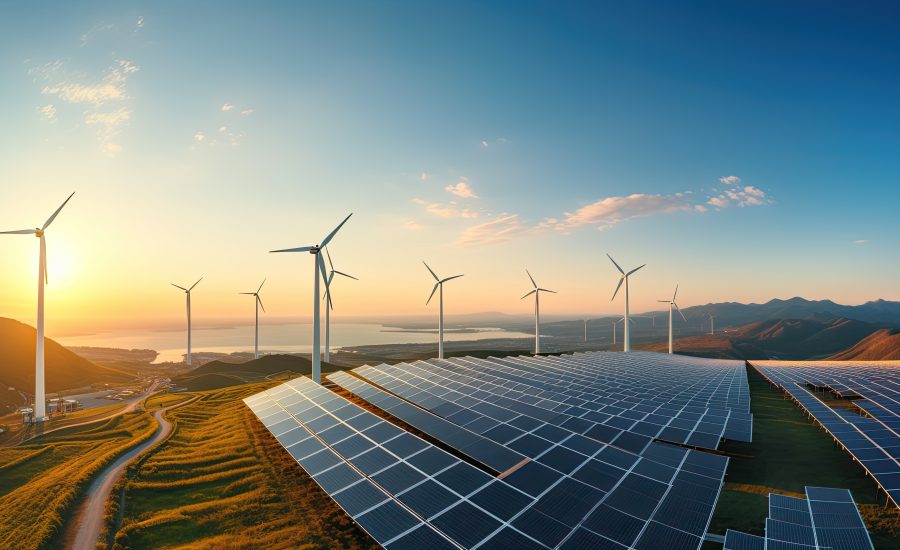
The UK’s Clean Power 2030 Action Plan sets a target of 45 to 47 GW of installed solar capacity by 2030 (more than double what’s there now). The pace that requires is real. Our teams have worked through DNO connection processes and NSIP consenting routes, and know what’s needed at each stage to keep a project moving rather than stalled in a queue.
Electrical engineering
Navigating grid connection for solar projects
UK solar developers consistently name grid connection as the point where projects lose time. Connection queues have lengthened, technical requirements differ by DNO area and voltage level, and an error in the electrical design early on tends to surface expensively later. We carry out load flow and fault level analysis, prepare grid application documentation and work directly with network operators to keep the process on track.
Complete system design
What solar farm engineering really involves
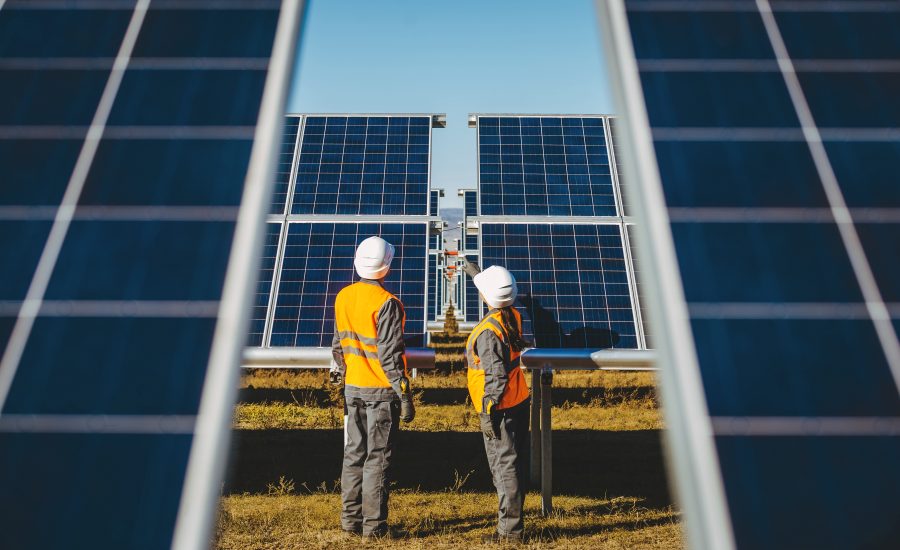
A solar farm is more complex than it looks from the road. Beyond panel layout, the engineering covers tracker or fixed-tilt racking, inverter selection and configuration, cable containment, earthing, drainage and access roads. Each has its own constraints, and all need to work together. We design the system as a whole. That matters less on commissioning day and more across a 30-year operational life.
Planning and biodiversity
Meeting BNG requirements on solar sites
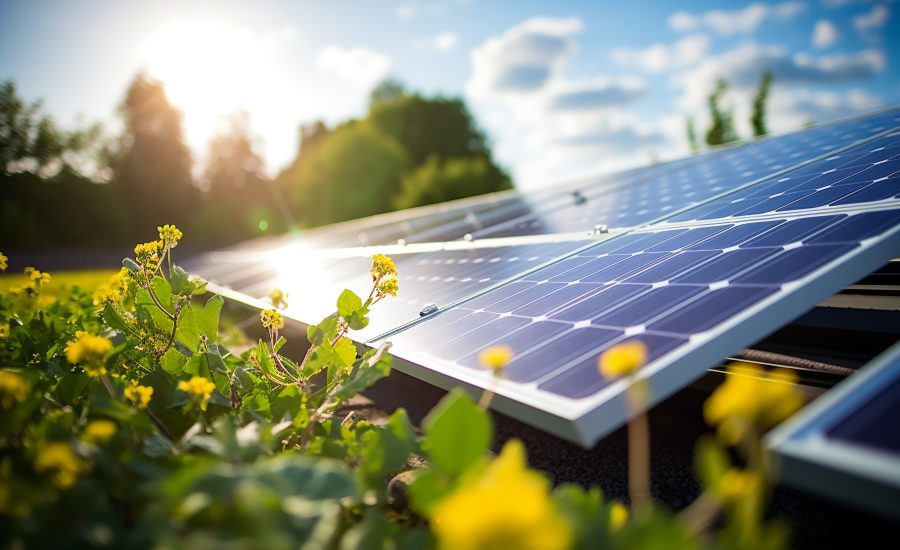
Since February 2024, mandatory biodiversity net gain has required a minimum 10% improvement in biodiversity value for solar developments in England. Solar sites are well-suited to meeting this: agrivoltaic layouts, combining managed grazing or wildflower planting with panel arrays, have delivered strong BNG outcomes and are increasingly familiar to planning committees. We assess BNG potential at feasibility, so it informs the design from the start.
Biomass engineering asks more of a design team than most energy disciplines. Fuel handling, thermal conversion, steam generation, emissions control and electrical export all run through the same plant. And a decision in one area changes the constraints in the next. We work across the full lifecycle (feasibility, consenting, detailed design and commissioning). The work is specific and the margins for error are tight. We’ve been doing it long enough to know where both lie.
Energy from waste engineering covers more ground than most clients expect. It spans process design, structural engineering, emissions control and a regulatory landscape that’s changing faster than the technology. We work with clients across the full project lifecycle, designing waste to energy facilities that extract real value from residual waste, from early feasibility through to construction-ready detailed design.
Energy infrastructure underpins every part of the UK power system: the substations that step voltage up and down, the transmission lines that carry it across the country, the protection schemes that keep it stable, and the generation assets that feed it. We work with power generators, distribution network operators and asset owners to engineer and maintain the power infrastructure the grid depends on.
Oil and gas engineering in the UK is operating in a sector that’s contracting at pace. Production from the UK Continental Shelf sits at roughly 20% of its 1999 peak, the government has ended new exploration licensing, and the NSTA projects an 89% fall in output by 2050. None of that makes the engineering easier. At Morson Praxis, we work with operators and Tier 1 contractors who need technical support across the productive life of existing assets and what comes after.
Wind farm engineering is one of the most technically complex disciplines in the UK’s energy sector. Onshore capacity stands at 15.7 GW and offshore at 14.7 GW, with government targets requiring significant further build-out by 2030. We work with developers, investors and landowners, assessing sites, managing consent, designing turbine foundations and seeing projects through to grid connection and handover.
FAQs: Understanding solar energy consultancy
Frequently asked questions (FAQs) about solar energy consultancy in the UK.
Solar energy consultancy in the UK is a service that takes photovoltaic projects from site identification through to construction, covering feasibility, planning, grid connection and detailed design. It brings engineering disciplines together under a single advisory function, so electrical, civil, structural and environmental requirements are resolved in coordination rather than in sequence, which is where most project delays actually originate.
Solar farm design is the technical process of laying out and specifying a photovoltaic generation site to perform within its land, grid and planning constraints. It covers panel orientation, racking system selection, inverter configuration, electrical infrastructure, civil groundworks and drainage. Sites designed without accounting for ground conditions, shading and grid capacity from the outset consistently underperform against their modelled yield.
Solar power engineering in the UK is the electrical and mechanical design discipline that turns a solar site into a functioning generation asset: inverters, cabling, switchgear, protection systems and any integrated battery storage. It operates in parallel with civil and structural engineering and is the primary determinant of whether a project secures a viable grid connection offer.
Solar engineering in the UK is applicable across project scales and typologies. Ground-mounted solar farms above 50 MW are Nationally Significant Infrastructure Projects, requiring Planning Inspectorate consent. Smaller ground-mount and commercial rooftop projects go through the local planning authority. The engineering requirements, particularly around grid connection and electrical design, are substantive at both scales.