29.09.2026
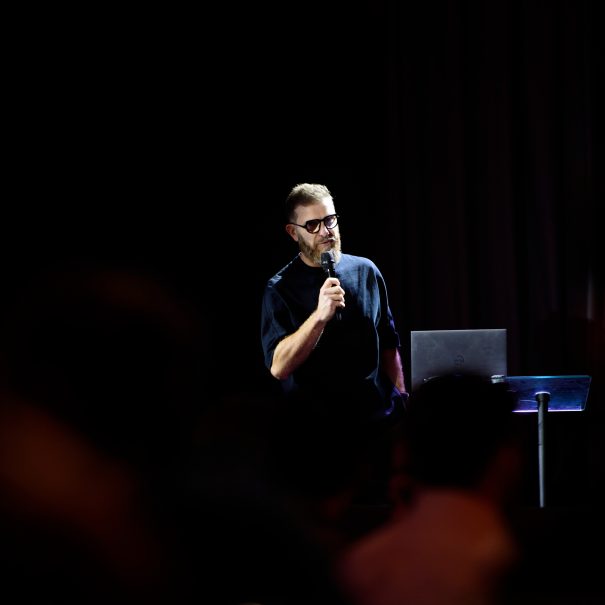
Last week, Morson Praxis Managing Director Gareth Beck joined business leaders, educators, innovators and policymakers at the North West Aerospace Alliance’s Future-Ready 2026 event to explore how organisations can unlock growth, strengthen competitiveness and prepare for long-term success.
Held in partnership with BAE Systems, the event formed part of the NWAA’s Big #4 Event Series and focused on what it means to be truly future-ready in an industry facing rapid technological change, sustainability challenges and evolving workforce demands.
Gareth was invited to speak on Unlocking Value Through Supplier Collaboration, exploring how strategic partnerships with suppliers can accelerate innovation, improve service and open up new market opportunities.
Moving beyond the traditional supplier relationship
For complex programmes, the value a supplier brings can extend far beyond delivering against a predefined specification.
Gareth’s presentation challenged organisations to consider what happens when specialist suppliers are involved earlier in the process – while the problem is still being understood and the solution is still taking shape.
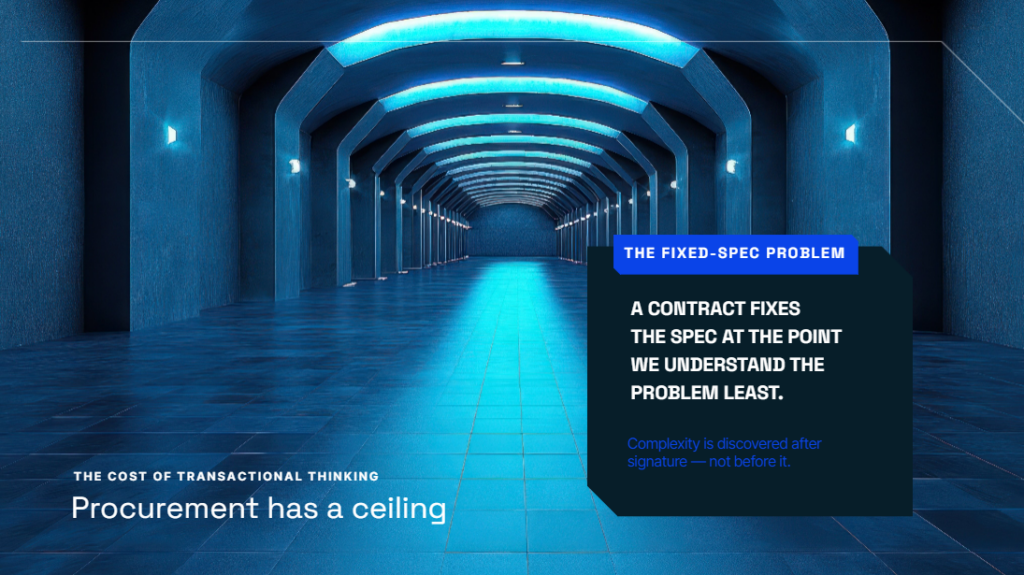
In conventional procurement models, specifications are often agreed before the full complexity of a challenge is understood. Suppliers are then tasked with delivering against those fixed requirements.
But complex programmes rarely remain fixed.
As understanding develops, new challenges emerge, technology evolves and opportunities become apparent. A partnership model creates the space for suppliers to contribute their specialist knowledge, challenge assumptions and help shape the solution as the programme progresses.
“The question isn’t simply whether a supplier can deliver what has been specified. It’s whether their expertise is being used to help determine what should be delivered in the first place.”
From supplier to strategic partner
Strategic supplier relationships can unlock value in several ways.
Early involvement allows organisations to draw on specialist judgement before key decisions become difficult or expensive to change. Closer collaboration can accelerate learning, identify potential issues earlier and build capability that benefits both organisations over the longer term.
But collaboration isn’t simply about involving suppliers earlier. It requires the right conditions for that relationship to work. Trust, aligned incentives, early engagement and careful supplier selection all play a role.
Not every supplier relationship needs to become a strategic partnership. The greatest value comes from identifying the areas where collaboration, expertise and shared problem-solving can have the biggest impact.
Why human judgement matters more as technology advances
The conversation also connects directly to the changing role of technology and automation.
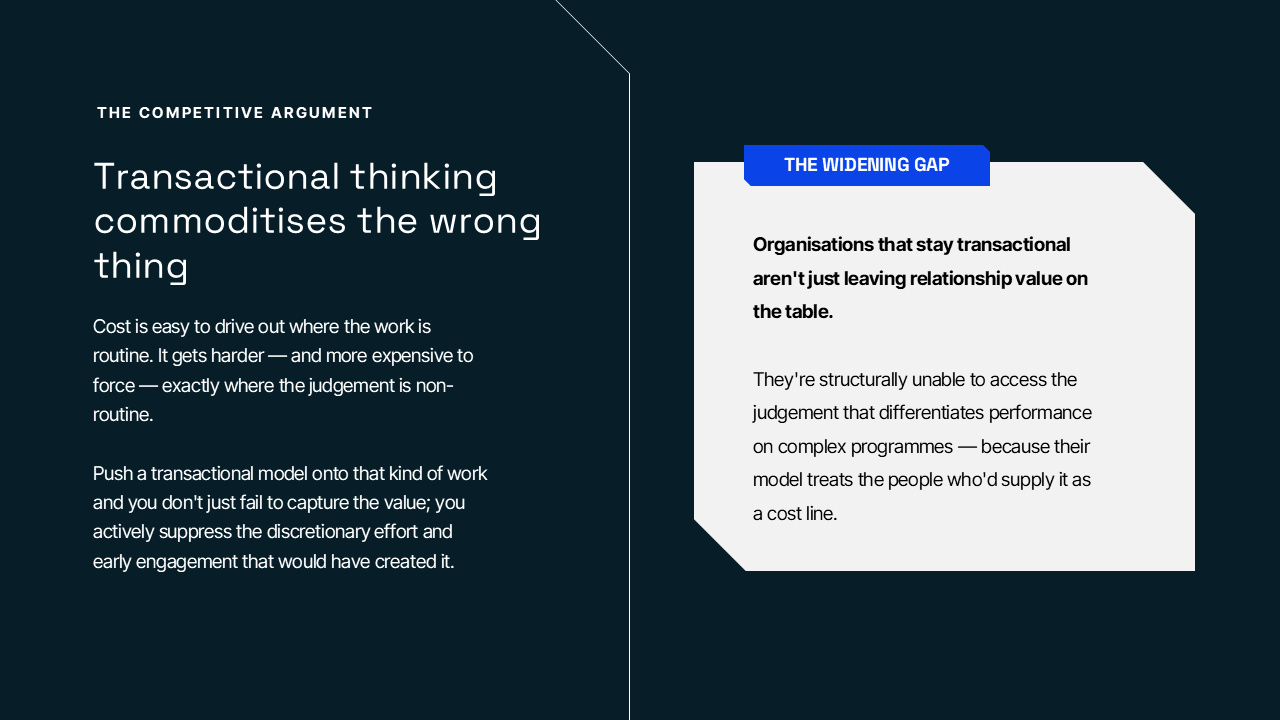
As automation and AI increasingly absorb routine tasks and decisions, the value of distinctly human capabilities becomes more apparent.
Complex problems still require people who can interpret incomplete information, challenge assumptions, understand context and make informed decisions when there is no obvious answer.
For organisations operating in highly complex and regulated environments, human judgement becomes a differentiator – particularly when it is combined with specialist technical expertise and technology.
“This is a key part of the Praxis Principle, technology can expand what people are capable of achieving, but human judgement remains critical in determining what should be done and how.”
Collaboration beyond aerospace
While the discussion at Future-Ready 2026 was rooted in aerospace, the principle extends across many of the UK’s complex industries.
From marine and energy to infrastructure, rail and the built environment, organisations are facing increasingly interconnected technical, commercial and societal challenges.
These challenges rarely fit neatly within a single discipline or organisation.
Unlocking their full potential requires organisations to bring the right expertise together, create the conditions for collaboration and give specialist partners the opportunity to influence solutions – not simply deliver them.
From collaboration to competitive advantage
The future-ready organisation isn’t simply the one with access to the latest technology or the largest supply chain.
It is the organisation that knows how to bring the right people, expertise and technology together – and how to create the conditions for them to add value.
For complex programmes, that can mean moving from a traditional supplier relationship towards a genuine strategic partnership, where expertise is brought into the conversation early and solutions are shaped collaboratively.
That shift has the potential to accelerate innovation, strengthen delivery and build capability for the future.

Summary: Top five takeaways
1. Fixed specifications can limit innovation
Requirements are often defined before the problem is fully understood, potentially limiting the value that specialist suppliers can contribute.
2. Early involvement changes the relationship
When suppliers are involved earlier, they can anticipate challenges, challenge assumptions and help solutions evolve as understanding develops.
3. Human judgement is becoming more valuable
As automation takes on more routine decisions, expertise, context and non-routine human judgement become increasingly important.
4. Partnership needs the right conditions
Trust, aligned incentives, early engagement and careful selection of strategic supplier relationships are critical to creating meaningful collaboration.
5. The opportunity extends beyond aerospace
The same principles apply to other complex UK sectors where organisations need to combine specialist expertise, technology and collaboration to solve increasingly challenging problems.
Want to explore the thinking behind Gareth’s presentation?
Request a copy of Gareth’s full presentation slides here, including an insight into how the Tempest Flight Demonstrator Programme provides a practical example of this approach in action.