Industries
→
Logistics & Distribution
We operate as logistics consultants across distribution centres, cold storage, e-commerce environments, and food service operations. Our approach goes beyond technical delivery, we understand the commercial realities that sit behind every brief.
Logistics facilities are not static structures; they are operational assets. They must perform from day one, adapt as demands shift, and retain long-term value. Every decision we make is grounded in that lifecycle perspective.
We design with purpose, to ensure reliability in operation, resilience in change, and clarity in investment.
-
Logistics & Distribution Industries ↓
- Cold Store Design →
- Distribution Centres & Warehouses →
- E-Commerce Logistics →
- Food Service →
What sets us apart in logistics & distribution
Multi-disciplinary expertise
One collaborative team
Our team brings together architecture, structural and civil engineering, mechanical and electrical building services, BIM consultancy, and project management. That breadth is critical in logistics, where gaps in coordination, missed planning conditions, or incorrect assumptions around utilities can escalate quickly and carry real cost.
By keeping these conversations in-house, early and with a clear understanding of programme and budget, we resolve issues before they reach site.
Commercial thinking
Tried and tested solutions
Our logistics & distribution expertise
Our expertise spans the four core markets within the sector. Each has distinct design requirements, planning considerations, and operational logic.
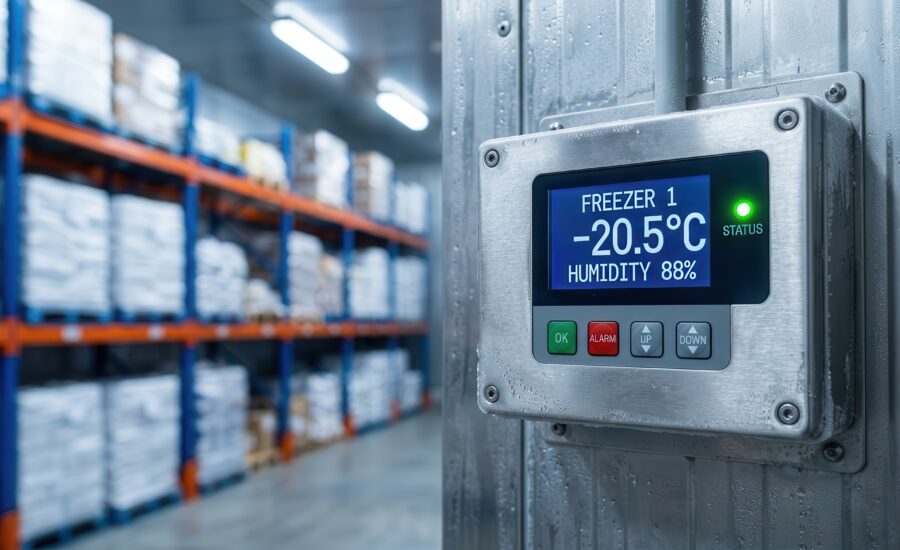
Cold Stores
Cold store design demands precision across disciplines. The building fabric, floor slab specification, vapour control strategy, and refrigeration system are closely interdependent – a weakness in any one affects the performance of the others. We work with refrigeration engineers and specialist contractors to produce designs that meet food safety requirements and hold up reliably over time, without unnecessary cost built into the specification.
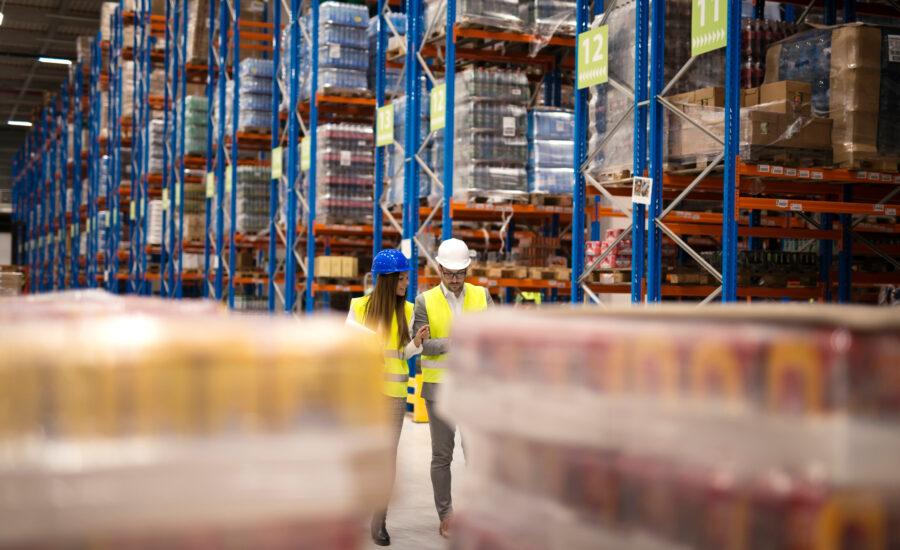
Warehouses
The brief behind a distribution centre or warehouse is rarely simple. Structural grid, clear height, dock ratios, yard depth, power capacity, fire strategy, BREEAM target – these variables interact, and balancing them requires judgement as much as technical knowledge. We design for speculative development and bespoke occupier schemes, keeping whole-life cost and future adaptability in view throughout.
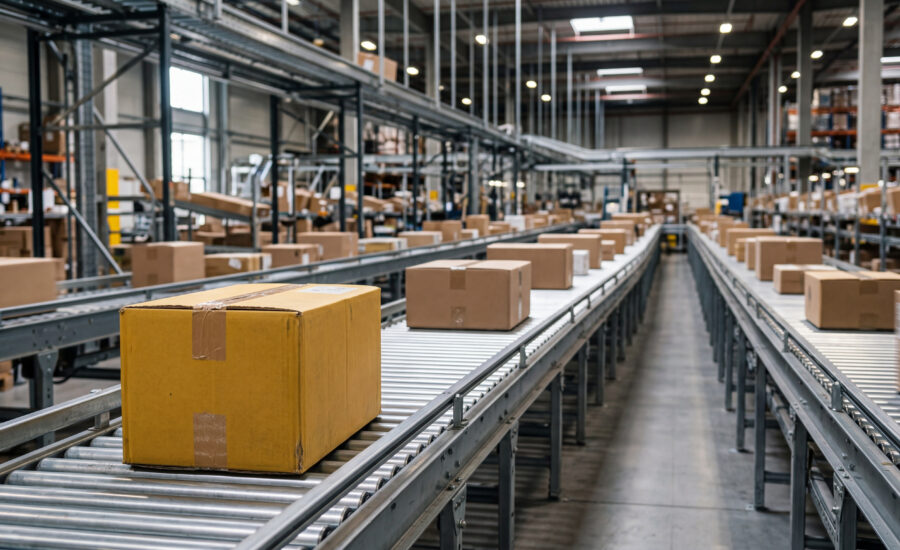
E-Commerce
E-commerce logistics buildings carry demands that a standard industrial shell isn’t always configured to meet. Higher power densities, mezzanine loading, conveyor and automation integration – these need to be resolved at the design stage, not accommodated later at additional cost. We work alongside systems integrators and occupiers so that the building is ready for the technology going into it, from the outset.

Food Service
Food service facilities operate under tight regulatory requirements and very specific operational constraints. Knowing what Food Standards Agency compliance looks like in practice, and how to meet it without over-engineering the solution, comes from having done it before. We pay close attention to the adjacencies between ambient, chilled, and frozen zones, staff welfare areas, and vehicle management – because the layout of a food service facility has a direct bearing on how efficiently it operates.
Logistics & Distribution in practice
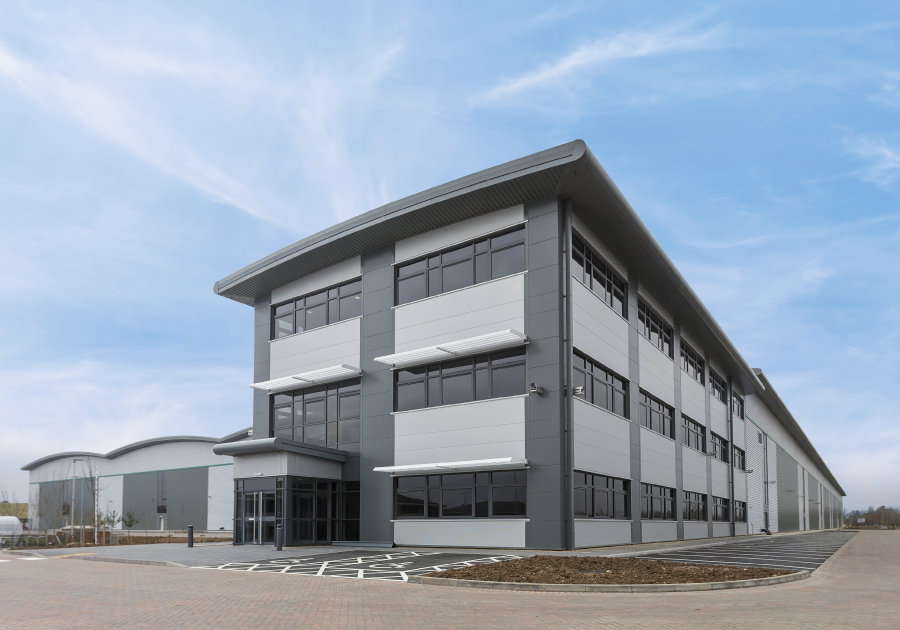

How we support logistics & distribution
The value a logistics consultant adds isn’t most visible in the drawings. It shows up in the risks that didn’t materialise, the costs that stayed under control, and the building that performs as it was intended to. That’s the measure we work to.
Planning for logistics development in the UK is rarely straightforward. National policy, local plan allocations, highway impact, flood risk, ecology, and heritage all bear on what’s achievable on a given site and at what cost. We support clients through the planning process with a clear grasp of what actually drives decisions, which is often more useful than knowing what’s procedurally required.
Sustainability requirements have moved considerably. EPC B is now a baseline expectation for new commercial property, and BREEAM ratings influence both occupier decisions and financing terms. We treat energy performance as part of the design from the start: fabric specification, roof loading for photovoltaic panels, EV charging provision, LED strategy, rainwater harvesting. Handled early, these don’t add cost – they define the quality of the building.
A logistics building is under constant pressure. Yards, docks, and internal circulation routes need to accommodate high volumes of vehicle and pedestrian movement without creating conflict. We look at traffic flow and pedestrian movement at the design stage, checking that yard arrangement, dock positions, and gatehouse configuration are workable for the intended operation. The details that don’t appear in a standard design review are often the ones that matter most to the people running the facility.
The same applies internally. The relationship between goods-in, storage, picking, dispatch, and staff areas needs to work with the operation, not against it. A building designed around how it will actually be used is less likely to require expensive modification once it’s occupied.
Investors acquiring or funding logistics assets need independent technical advice that’s substantive and clear. We carry out building surveys, structural and M&E assessments, and planning checks that give a complete picture of an asset, including the liabilities that aren’t immediately visible. Our reports are written for decision-makers: specific about findings, clear about risk, and costed where remediation is needed.
Requirements shift. Automation technology moves on, occupier needs evolve, and buildings can date faster than expected if they haven’t been designed with flexibility in mind. We think about structural grids that accommodate different racking configurations, power supplies specified for future demand, and roof structures capable of carrying additional load. A building that can adapt tends to be one that holds its value.
Turning theory into practice

Your partner in logistics & distribution
Talk to our logistics consultants
If you’ve got a project at any stage, from initial site appraisal to a scheme already in design, we’re happy to have a conversation about it. We’ll tell you what we think, what the risks look like, and where we can add the most value.
Delivery done differently
Discover how our broad range of multi-disciplinary services support the logistics & distribution industry.
FAQs: Understanding logistics & distribution
Distribution and logistics are two closely related concepts that are vital components of supply chain management. Distribution refers to the process of moving goods or products from the manufacturer to the end-user or consumer. Logistics, on the other hand, encompasses the entire process of planning, implementing, and controlling the movement and storage of goods or products, from raw materials to finished goods, to ensure their timely and efficient delivery to the intended destination.
While logistics and distribution are interrelated, they are not the same thing. Logistics involves the planning, coordination, and management of all activities related to the movement of goods from one place to another, including transportation, warehousing, inventory management, and order processing. Distribution, on the other hand, is a subset of logistics that specifically refers to the physical movement of goods from one location to another. In other words, logistics is a broader concept that includes distribution as one of its key components.
The four types of logistics are inbound logistics, outbound logistics, reverse logistics, and third-party logistics. Inbound logistics refers to the movement of materials and goods from suppliers to the company’s production facility. Outbound logistics, on the other hand, refers to the movement of finished products from the company’s production facility to the end customers. Reverse logistics is the process of managing the return of products from customers, including repairs, refurbishments, or recycling. Third-party logistics (3PL) is the outsourcing of logistics and distribution functions to a specialised provider. Each type of logistics requires specific strategies and processes to ensure efficient and effective operations.
Logistics and distribution are critical components of any business that produces, stores, and sells physical products. Effective logistics and distribution ensure that goods are transported from one location to another efficiently, reliably, and cost-effectively. It involves managing the entire supply chain, from the procurement of raw materials to the delivery of finished products to customers. Effective logistics and distribution can enhance customer satisfaction by ensuring timely and accurate delivery, reduce costs through efficient transportation and inventory management, and optimise the use of resources by reducing waste and increasing productivity. Logistics and distribution are essential to achieving business goals, such as increased revenue, improved profitability, and sustainable growth.