Projects
→
Network Rail, Panoptic Bridge Management
Working with Network Rail, Nottingham Trent University and Birmingham City University.
Client Brief
Digitising asset management
Network Rail sought to digitalise the condition monitoring of their extensive asset portfolio to enable objective, data-led decision-making. Their aim was to reduce reliance on traditional, subjective methods by adopting advanced technologies that support the creation of a ‘Digital Railway’.
A key focus was on developing a scalable digital solution for the condition monitoring and lifecycle management of their 29,000+ bridge assets.
This approach would allow asset care teams and project engineers to make better-informed decisions across the full lifecycle of each structure, delivering both operational efficiency and long-term value.
Project Overview
Digital railway strategy
Morson Praxis, in collaboration with Nottingham Trent University and Birmingham City University, have worked closely with Network Rail to design and implement digital techniques that improve upon current asset monitoring and assessment methods.
The project has centred on advanced data collection methods and applying the data to support machine learning, artificial intelligence, and provide a solution which facilitates digital examinations to be performed.
Now in its fourth phase, the latest projects are focussed on further AI enabled defect detection enhancements and integration activities with their wider asset management system, providing digital examinations as an option for the routes moving forward.
Image Gallery

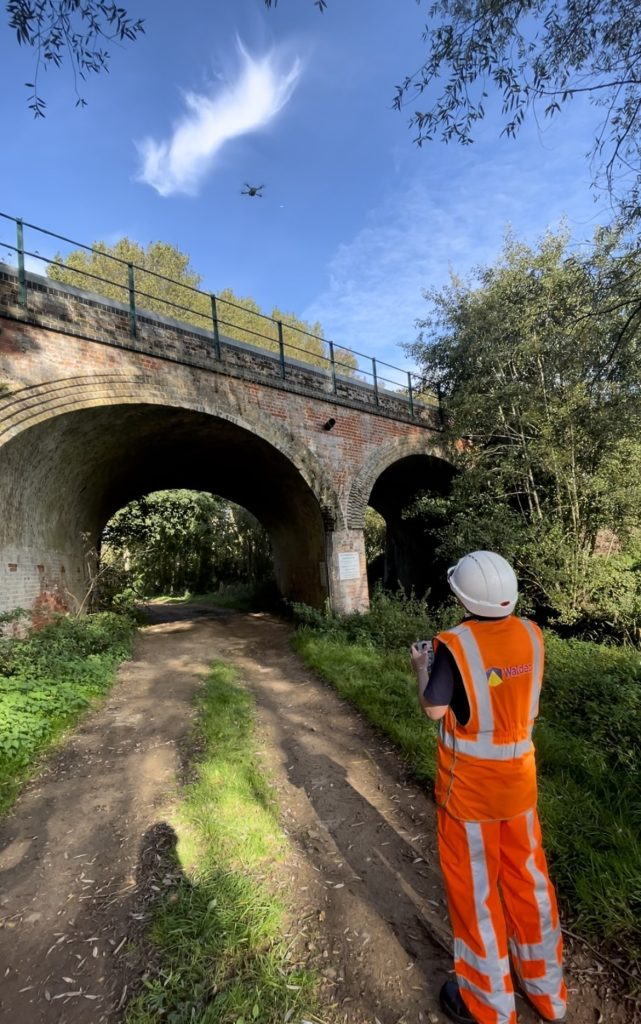
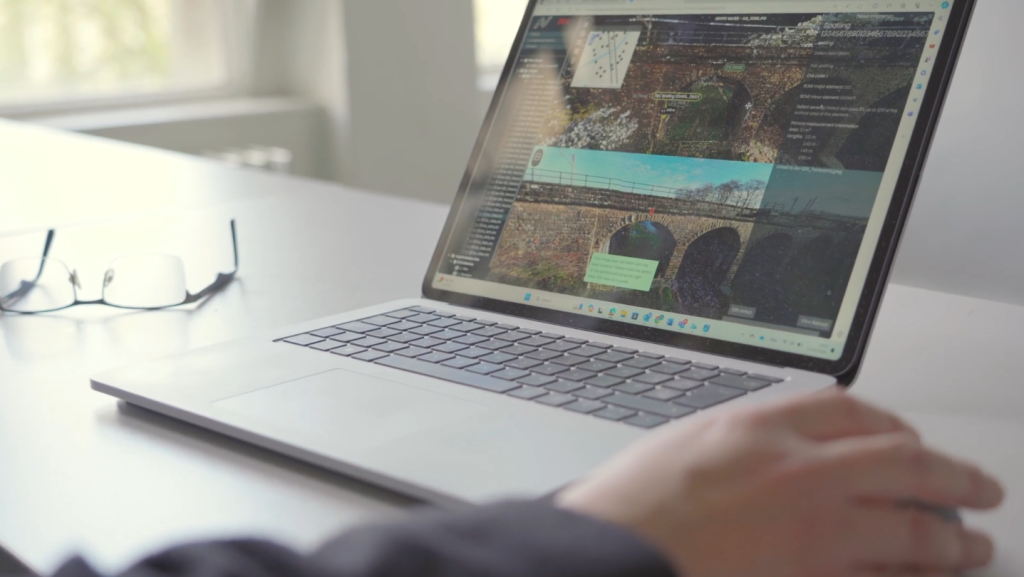
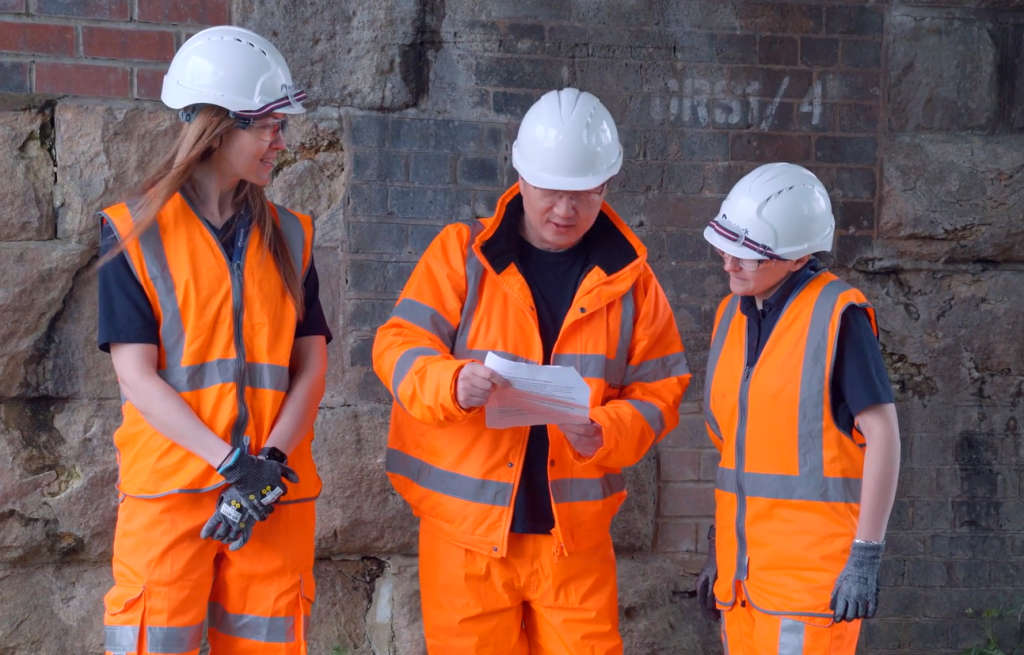
Our Solution
A 'Golden Thread' approach
Focusing on employing a ‘golden thread’ approach to the data which is collected, the team worked collaboratively with Network Rail to understand the many limitations of the current methods, and how through a data-focussed approach this could be both improved and leveraged to provide wider reaching asset care benefits for Network Rail.
Undertaking trials over a cross section of masonry bridge and viaduct assets, the team focussed on real-world application of digital data collection and its use within an engineering environment.
The initial trials worked to understand how engineering decisions could be better informed through the use and analysis of digital data within an asset viewing environment. These trials facilitated the establishment of a data specification, providing a framework that ensures consistent data is delivered by Network Rail suppliers for use within the asset viewing solution facilitating digital examinations.
Results
Leading digital surveying
The adoption of leading digital surveying technologies offered many benefits to the approach overall. Previously, individual photographs would be taken of defects which were appended to reports with engineer’s annotation. Whilst these do provide individual instance snap shots of the defect, they fall short in offering a holistic view of the asset to better understand their location and frequency.
Capturing geolocated 360-degree data sets of the structure and its immediate surrounding area has enabled the viewing of high-definition imagery, which via point cloud technology has allowed measurable and comparable assessments to be made of each assets condition. These added benefits support progressive assessments, allowing for accurate understanding of defect progression between surveys.
Benefits
A bespoke solution
A key benefit of the approach considerably reduces the need for boots on ballast, which offers huge improvements from a health and safety perspective, enabling engineers to review and analyse the data remotely.
Working with these data sets has enabled the team to research and develop how machine learning techniques for object and defect recognition can be integrated to support engineering assessments and the categorisation of the defects. Working with route teams has provided valuable feedback and enhancements to ensure a solution that is fit for purpose.
The benefits realised by the engineers involved with the trials has led to a digital examination module being developed as part of the ongoing wider asset management system being built within the Intelligent Infrastructure programme, enabling Network Rail to maximise the engineering potential of this new approach.
Testimonials
Hear from the experts
Veronica Ruby-Lewis, Associate Director at Morson Praxis shared:
“Being able to support Network Rail over the past eight years and turn their aspirations into a working digital examination solution has been a prestigious project for Morson Praxis. The project has been founded on a strong and collaborative working relationship, which has certainly enabled the teams to deliver the best results.
“It’s great to see the success of the project being recognised within the wider Network Rail team, with ongoing research and development into advanced AI technologies for defect detection underway, alongside integration of the solution into their wider asset management system providing digital examinations as an option for the routes moving forward.”
Nataliya Aleksieva, Senior Engineer at Network Rail shared:
“The trials undertaken by Morson Praxis and their university partner on 50 masonry bridges in 2020 were not only to demonstrate the capability of the technologies but also to enable Network Rail engineers to holistically evaluate the condition of the structures off-site in their real environment. The project team were able to combine point cloud surveys undertaken by drones and terrestrial laser scanning with sufficient accuracy which provided a complete survey for the structures.