27.05.2026
If you’re responsible for infrastructure that has to last decades, you already know the ground rules have changed. You’ll find practical answers in our sustainability and net zero thinking, and this guide is designed to make your decisions sharper.
It covers what climate resilience engineering means in practice:
- The UK climate projections that should be driving your design standards
- What genuine flood resilient design looks like at asset level
- How tto approach urban heat mitigation
- How to extreme weather-proof the critical infrastructure you’re accountable for
- How resilience and net zero reinforce each other when you get the brief right
Climate Change Risk, Resilience and Adaptation
The infrastructure the UK built for narrower temperature ranges and more predictable rainfall is now operating outside its original design envelope:
- A bridge calibrated to a 1980s flood-return period.
- A drainage system sized for yesterday’s rainfall intensities.
- A building whose thermal mass was never specified for sustained 40°C heat.
These are live liabilities on asset registers right now.
Climate resilience engineering is the discipline that addresses this directly. It involves designing, building and retrofitting infrastructure to recover from and adapt to climate-driven shocks like rising temperatures and flooding. It’s not simply about robustness under stress. It’s about absorbing shocks and recovering quickly when conditions deviate from design intent. The effects of climate change make this a first-order engineering problem.
What’s the Difference Between Resilience and Adaptation?
Climate change adaptation and climate resilience are often used interchangeably. They’re not the same thing.
- Climate change adaptation is the strategic process: identifying how conditions will change and adjusting systems, land use and policy to match.
- Climate resilience is the operational outcome: the capacity of a specific asset, network or community to continue functioning despite those changes.
How do we adapt to a changing climate? Resilient systems and climate action have to work in tandem. You can’t deliver one without the other. Infrastructure, engineering and climate change adaptation interact across timescales that most procurement frameworks weren’t designed to handle.
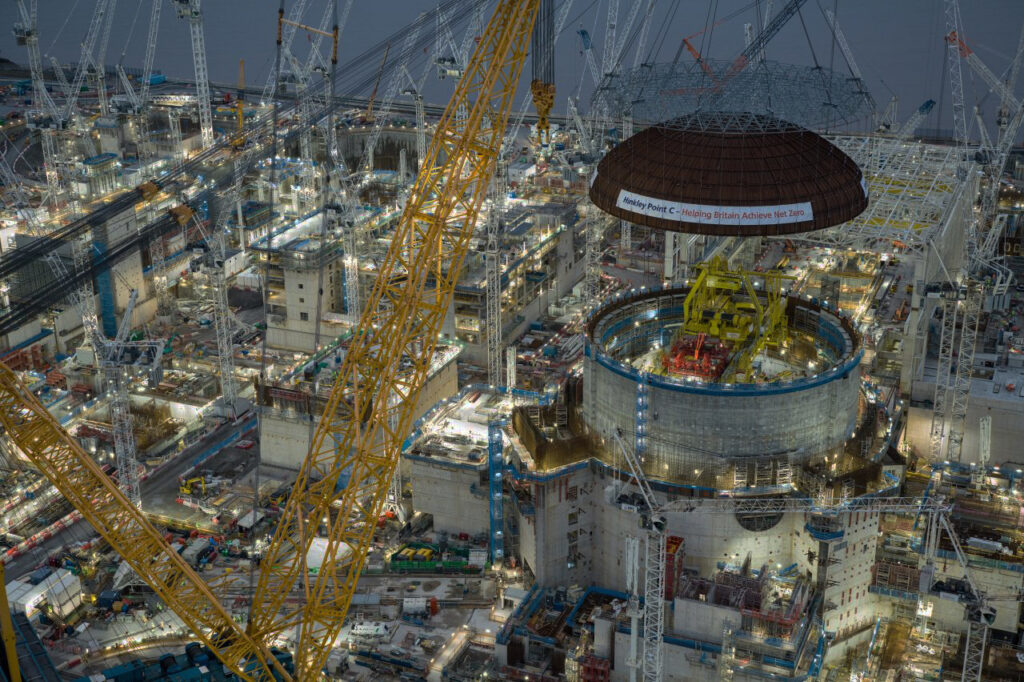
- A nuclear facility commissioned today may operate beyond 2080.
- A road network built now will face rainfall intensities that the UK’s authoritative climate projections suggest will be materially higher by the 2050s.
The question is how to design for climate risk rigorously and how to make that case to clients who still treat resilience as an optional extra.
The City Resilience Framework and City Resilience Index
For organisations working at urban scale, the City Resilience Framework (CRF), developed by Arup and the Rockefeller Foundation, provides a structure for assessing how cities can adapt and transform in the face of shocks and stresses. Its companion tool, the City Resilience Index (CRI), translates that framework into 52 measurable indicators, giving city governments and infrastructure operators a baseline from which to track progress. We draw on it when framing engineering ecosystem resilience conversations with clients who need a whole-systems view, rather than an asset-by-asset audit that misses the interdependencies.
Sectoral Resilience and Who It Affects
- Sectoral resilience means different things to different clients, and each frame demands a different engineering response.
- For property owners, the priority is reducing physical damage and insurance exposure.
- For infrastructure operators, it’s continuity of service and regulatory compliance.
- For city governments, it’s the integrated capacity of the urban system as a whole.
- For water utilities, it’s maintaining supply and drainage under rainfall extremes that are already intensifying.
What connects all of them is this: engineering and design teams are increasingly looking to embed climate risk into their operations and outlook to improve resilience. That’s been at the core of how we’ve engaged with climate change engineering projects for years. As climate engineering companies go, we’re not here to sell a framework. We’re here to do the engineering.
UK Climate Projections and Engineering Implications
The Met Office’s UK Climate Projections 2018 (UKCP18) are the authoritative evidence base for climate resilience planning and design in the UK. Updated from UKCP09, they provide projections out to 2100 at scales from 60km global resolution down to 2.2km local. A resolution that can realistically simulate high-impact events like localised summer cloudbursts and storm surges at specific coastal sites. For any climate resilience in engineering work in the UK, UKCP18 is the starting point.
What UKCP18 Tells Engineers
The engineering implications are significant. Under high emissions scenarios, UK summers are projected to be hotter and drier, winters warmer and wetter, and extreme rainfall events materially more intense. Research published alongside UKCP18 indicates that across the UK, the 30-year return level of one-hour precipitation is projected to increase by approximately 30%, and daily extreme precipitation by around 20%, by 2070 under RCP8.5. Windstorms that currently occur roughly once every 20 years could occur once every ten years by the 2070s under the same scenario.
For engineers, these numbers translate directly into loading cases. Structural adaptation requirements for drainage infrastructure, retaining walls, cladding systems and coastal defences all shift when you recalibrate the hazard baseline. Assets designed and specified today need to account for conditions that won’t arrive at full intensity for 30 or 40 years, but whose trajectory is already determinable. That’s the essence of what a good resilience engineer does. Design for a future that’s already in the data.
Accepting the ‘New Normal’ for Infrastructure
One of the most consequential shifts in UK infrastructure planning is accepting that there is a ‘new normal’ for infrastructure. Design standards underpinning much of the UK’s built environment were calibrated against historical climate data. UKCP18 makes clear that historical data is no longer an adequate proxy for future conditions.
In practice, this means engineers should be drawing on UKCP18 data in feasibility studies. Not as a desktop exercise in risk registers but as an active input to structural design, drainage sizing, materials specification and service-life modelling.
It also means infrastructure operators need to ask their advisers the right questions from the outset. Does this design account for climate projections to the end of its design life? If the answer is uncertain, that’s the problem to solve.
The UK has made institutional progress. The National Adaptation Programme, Environment Agency investment and the Climate Change Committee’s reporting cycle all represent real infrastructure for managing risk. But the gap between what the science says and what gets built remains wide. Next steps for resilience in the UK require the engineering industry to treat UKCP18 as a live design input, not a reference document to cite once and file. We think that’s non-negotiable for anyone serious about climate change resilience services in the UK market.
Flood Resilient Design in Building and Infrastructure
Flooding is the most economically damaging climate hazard in the UK. Physical damage to property and infrastructure costs an estimated £2.4 billion annually in England, a figure projected to rise to £3.6 billion by 2050 as flood risk intensifies under climate change. A third of England’s critical infrastructure, including roads, railways, energy networks and water systems, is already at risk. An average of 700 flood events are recorded in England every year, each one eroding productivity, straining supply chains and imposing costs on communities that can take years to recover.
Flood resilient design, done properly, is one of the most direct ways civil engineers fight climate change at asset level. And the return on investment is clear. Environment Agency and Defra data confirm that every pound invested in flood defences prevents around eight pounds in economic damage. Getting it right is an economic argument as much as an engineering one.
What Flood Resilient Design Actually Involves
Flood resilient design means more than keeping water out. It means designing assets that can be recovered quickly when water does get in. The industry-standard two-part approach (resistance, which prevents ingress, and resilience, which limits damage and accelerates recovery) is necessary but not sufficient on its own. The design decision that matters most is matching the combination of measures to the specific asset type, its function and its risk profile.
or new buildings, this means elevating ground floor levels, specifying flood-resistant materials for the envelope and lower floors, designing service penetrations to allow rapid reinstatement, and positioning critical plant above the design flood level. For infrastructure, flood resilient design considerations need to be embedded in structural specification, access route planning, substation siting and drainage design from the concept stage. Climate resilient building starts at the brief.
Sustainable Drainage Systems as a Resilience Tool
Surface water flooding, caused by rainfall overwhelming drainage systems, is now the most frequent form of flood risk in England, yet historically the least coordinated. Sustainable drainage systems (SuDS) are the engineering response: designed to control and treat surface water before it enters the network, capturing the energy of rainfall at source rather than passing it downstream. When they’re integrated from the outset rather than bolted on at planning stage, SuDS deliver flood attenuation, water quality improvement, biodiversity net gain and amenity value simultaneously.
We design sustainable drainage systems into projects across the built environment as a core infrastructure element. The engineering challenge is integration. SuDS need to be sized, located and maintained within a coherent drainage strategy, not treated as a landscaping gesture. When they’re designed holistically, they also contribute to net resilience gain, delivering measurable improvements over baseline conditions rather than simply mitigating the impact of new development.
Addressing Growing Climate Risks in Flood Planning
The most common failure in flood risk assessments is using historical data without climate change uplifts. UKCP18 provides the evidence base to fix that, but only if engineers are specifying future climate scenarios into their hydraulic modelling, not just present-day return periods. Addressing growing climate risks in flood planning means designing for the 2070 flood envelope. The design life of most major infrastructure makes that non-negotiable. Climate change adaptation and infrastructure resilience are the same conversation, viewed from different angles.
Urban Heat Island Mitigation Strategies
The urban heat island effect, where dense built environments retain significantly more heat than surrounding rural land, isn’t a new phenomenon. Under UKCP18 projections, though, it becomes a serious engineering hazard. UK urban temperatures could be materially higher than the surrounding countryside during heatwave conditions, creating loading cases for building services, public health exposures for residents, performance constraints for digital infrastructure, and structural risks for pavement and rail assets that were never specified for sustained extreme heat.
Urban heat mitigation is, in this sense, both a public health and an asset management problem.
Urban Heat Mitigation in Practice: Building and Street Scale
Urban heat island mitigation strategies operate at multiple scales, and the appropriate interventions differ at each.
At building level, the priority measures are:
- Cool roofs with high solar reflectance
- Green and blue roofs combining evapotranspiration with stormwater management
- High-performance glazing that reduces solar gain without eliminating daylight
- Exposed thermal mass that moderates internal temperature swings
These are specification decisions that can be made at RIBA Stage 2 with minimal cost premium, and that compound in value as peak temperatures rise.
At street level, tree canopy cover and shaded public realm design reduce surface temperatures and deliver air quality, biodiversity, thermal comfort and amenity co-benefits that make the investment case more straightforward. The evidence on tree canopy in urban environments is consistent. Even moderate increases in cover materially reduce ambient temperatures in the immediate vicinity.
District-Scale Urban Heat Planning
At district or urban scale, the design becomes more complex. It needs master planning that accounts for urban geometry, prevailing wind corridors, surface albedo and solar orientation across an area, not just at individual plot level. This is where collaborative planning and sustainable low-carbon architecture converge. The thermal performance of a city block depends on decisions made site by site. Which is why climate adaptation in engineering needs to start at masterplan stage, not detailed design. By the time you’re specifying materials, you’ve already determined whether the scheme will be thermally viable in a 2°C world.
The Building Services Dimension
Extreme heat creates acute mechanical and electrical building services challenges. Cooling loads increase non-linearly with peak temperature, and systems sized for current summer conditions may be significantly undersized for 2050 and beyond. Low-carbon building services design needs to account for both the operational carbon of cooling systems and their resilience under future climate scenarios, specifying refrigerants with low global warming potential, embedding passive cooling strategies where feasible, ensuring systems can be upgraded as conditions change, and accounting for thermal mass from the outset. These decisions compound across a building’s lifetime. Getting them wrong at Stage 2 is expensive to correct at Stage 5.
Extreme Weather-Proofing Critical Infrastructure
A systemic approach to climate resilience means treating the network, not just the node. The failure modes that cause most economic and social disruption aren’t usually the dramatic collapse of a single structure. They’re the cascading failures that occur when interdependent infrastructure systems lose connectivity. Power outages that disable water pumping. Flooded roads that prevent emergency access. Overloaded stormwater networks that back up into buildings. Understanding these dependencies is where serious extreme weather-proofing begins, and it’s a task that requires a whole-systems engineering perspective from day one.
Key Aspects of Climate Resilience Engineering for Critical Systems
The key aspects of climate resilience engineering for critical infrastructure converge around consistent principles, each addressing a different vulnerability. Structural adaptation means upgrading asset specifications to account for revised climate loadings:
- foundations sized for expansive soils as ground moisture regimes shift
- drainage capacity designed for intensified rainfall
- thermal envelope performance specified for higher peak temperatures
- connection details reviewed for wind uplift under more frequent extreme windstorms.
Each of these is a determinable calculation, not a precautionary guess.
Data-driven design is the second critical strand. Using UKCP18 climate projections and hydraulic simulation to stress-test designs against future scenarios, rather than historical norms, changes the conversation from “what’s happened before?” to “what’s coming next?” That’s the shift that separates climate change engineering solutions from conventional engineering with a risk register appended.
Management and maintenance is the third, and the most easily neglected. Climate change increases the rate of asset deterioration: thermal cycling, moisture fluctuation and ground movement all accelerate degradation in ways that standard inspection schedules don’t always anticipate. Infrastructure operators need maintenance regimes that reflect the climate trajectory of the asset, not just its original specification.
Innovation in Infrastructure Resilience
Innovation in infrastructure resilience is increasingly driven by the convergence of digital engineering and physical design. Digital twins (virtual replicas of physical assets continuously updated with real-world sensor data) allow operators to model climate stress scenarios, identify vulnerability hotspots and prioritise maintenance interventions before failure occurs. We use dynamic simulation modelling to test building and infrastructure performance across a range of future climate scenarios, making sure designs are functional across their full projected life. The goal is to design systems that are robust across a credible range of futures.
Ways to Ensure That Infrastructure Is Resilient from Day One
The most reliable ways to ensure that infrastructure is resilient share a common characteristic: they embed climate risk early. The cost of resilience measures increases sharply as a project moves from brief through design to construction. Getting resilience right at the outset, at inception and concept stage when design decisions are still fluid, is where the biggest gains are available at the lowest marginal cost. Retrofitting resilience into a completed asset is always more expensive than designing it in.
Engineering climate resilient infrastructure requires someone who can hold the climate risk question and the engineering design question at the same time. That’s what we do. Engineering ecosystem resilience at national scale ultimately depends on the quality of decisions being made at project level.
How to Build Climate Resilient Infrastructure
Climate resilient infrastructure solutions for civil engineering projects don’t follow a single recipe. Asset types vary. Sectors vary. Risk profiles vary. But there are principles that hold consistently across the work we do, and they’re worth setting out clearly because they change how you approach the brief.
Key Principles and Approaches to Resilient Design
The strongest starting point is structural adaptation. Every asset has a design life, and that design life needs to be mapped against the climate trajectory projected for its specific geography. For long-life assets in nuclear, water or energy infrastructure, this means designing to conditions that may not arrive for 50 years, but which are already determinable from the projections. This is how engineers create resilient infrastructure: not by building heavier, but by building for the right future.
Nature-based solutions are increasingly central to the climate adaptation toolkit. Wetlands, managed floodplains, urban tree canopy and bioswales provide flood attenuation, cooling, carbon sequestration and biodiversity in ways that hard infrastructure often can’t replicate at equivalent whole-life cost. Where they’re integrated into engineering ecosystem resilience strategies, they typically outperform conventional approaches on cost, performance and co-benefits. They also tend to age better (a wetland doesn’t corrode).
Data-driven design follows naturally from both of the above. Climate projections, hydrological models, soil movement data and urban heat mapping are all available at a resolution that supports genuine engineering decision-making, not just headline risk assessments. We use this data to move from rule-of-thumb resilience uplifts towards specific, evidenced design choices that clients can defend at planning, through procurement and in operation.
Collaborative Planning and Net Resilience Gain
limate resilient building and infrastructure doesn’t stop at the red line boundary. Flooding, heat, wind and ground instability are catchment-scale phenomena. Effective climate adaptation and resilience needs coordinated planning across asset owners, local authorities, utilities and developers, alongside an engineering partner who can speak across all of those interfaces without losing rigour in the handoffs.
Net resilience gain is the emerging framework that captures this ambition. Just as biodiversity net gain has become a planning requirement, net resilience gain asks whether new development improves the resilience baseline of the wider system, not merely mitigates its own impact. We think this direction will be embedded in UK planning policy within the next decade. Clients who get ahead of it now won’t be scrambling to catch up later.
Building Your Resilience: How We Help
We bring civil and structural engineering, net zero and sustainability consultancy, water management and decarbonisation expertise together on climate resilience projects. That means you’re not managing separate specialists talking past each other. You get a coordinated team that understands how flood risk, thermal performance, structural specification and carbon accounting interact, and can translate that into a design that holds up under scrutiny: through planning, procurement, construction and the climate conditions that are already on their way.
Building your resilience isn’t a future ambition. The projects being commissioned today will face the climate of the 2060s. The engineering decisions being made now determine whether they function then. If you want climate change resilience services grounded in real engineering capability rather than advisory frameworks, that’s what we’re here for.
Combining Resilience with Net Zero: The Co-Benefits Approach
There’s a persistent assumption that climate resilience and net zero are competing priorities: that building infrastructure more robustly consumes carbon and budget that should go into decarbonisation. The engineering evidence says otherwise. When properly integrated from the outset, they reinforce each other in ways that reduce cost and improve whole-life performance.
Climate Resilience and Sustainability: Two Sides of the Same Brief
Climate resilience and sustainability converge at the level of system design. A highly insulated building envelope reduces heating and cooling loads, and also provides greater thermal stability under extreme heat events. A sustainable drainage system that reduces surface water runoff also attenuates flood peaks downstream. Urban tree canopy that cools streets and sequesters carbon also reduces cooling loads in adjacent buildings. Specify low-carbon mechanical ventilation correctly and you’ve also improved occupant thermal comfort during heatwaves. These are co-benefits: designed in, not incidental.
Driving sustainable transformation through the co-benefits approach requires engineering thinking that sees building fabric, services, drainage and landscape as an integrated system. This is how we approach net zero consultancy for commercial buildings and decarbonisation strategy work: recognising that the best low-carbon design is also the most resilient, and that the two objectives share most of their engineering solutions.
Embodied Carbon and Resilience Specification
There’s one genuine tension worth naming: materials specification. Resilience upgrades often increase structural specification, which can increase embodied carbon. That’s a real trade-off and it needs explicit assessment, not blanket avoidance. Our approach to embodied carbon assessment integrates whole-life carbon accounting alongside climate risk modelling, so that resilience decisions are made with full visibility of their carbon implications. Sometimes the right answer is a higher-specification structural option. Sometimes it’s a nature-based solution that delivers equivalent function at lower embodied carbon. Getting that call right requires engineering judgement – not just carbon accounting and not just structural engineering, but both together.
Infrastructure for a Climate Resilient Future
Infrastructure is a critical part of the solution to climate change: through the decarbonisation of the built environment and through the adaptation measures that will determine whether communities and economies can function as conditions change. Building resilient systems and cutting carbon are the same project, approached from different directions.
The engineers and consultants defining the next generation of UK infrastructure are the ones who understand how to work both angles at once. That’s the standard we set ourselves. Whether you need a resilience engineer embedded in a programme team, a climate consultancy engagement to frame a long-life asset decision, or a full climate engineer capability across design and delivery, we’re built for it.
Infrastructure for a climate resilient future is an engineering brief. Welcome to the sharp end.