11.06.2026
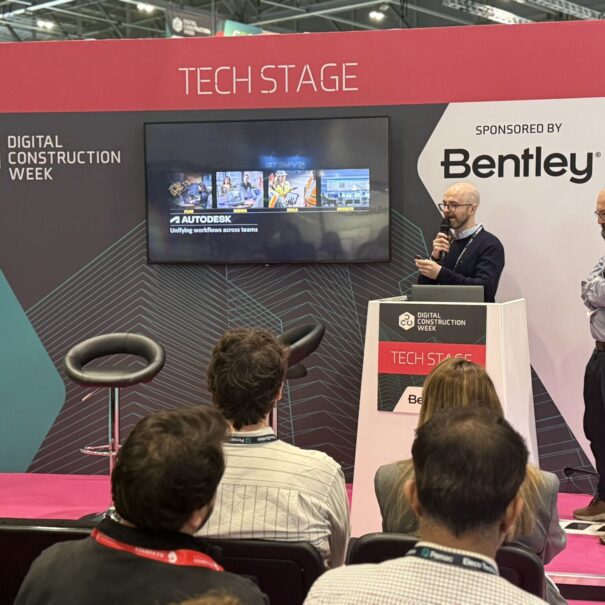
More than 9000 attendees, 150 exhibitors, 230 sessions, and 400 speakers gathered at the Excel London on 3-4 June for Digital Construction Week 2026 (DCW), creating one of the sector’s most influential forums for innovation, collaboration and future thinking.
The energy this year was focused on one central theme: turning digital innovation into practical, operational outcomes across the entire asset lifecycle. While DCW covered many technologies – Artificial Intelligence (AI), BIM, digital twins, robotics, automation, data management, and sustainability – the recurring message across the two days was not simply adopting new technology, but embedding it into real-world delivery, operations, governance, and business performance.
Representing Morson Praxis at the event, Associate Director Veronica Ruby-Lewis joined industry leaders, technology specialists and infrastructure professionals to explore the trends shaping the future of the built environment.
Following the event, we caught up with Veronica to hear her key takeaways from two days of insight, innovation and practical examples of digital transformation in action. She shared:
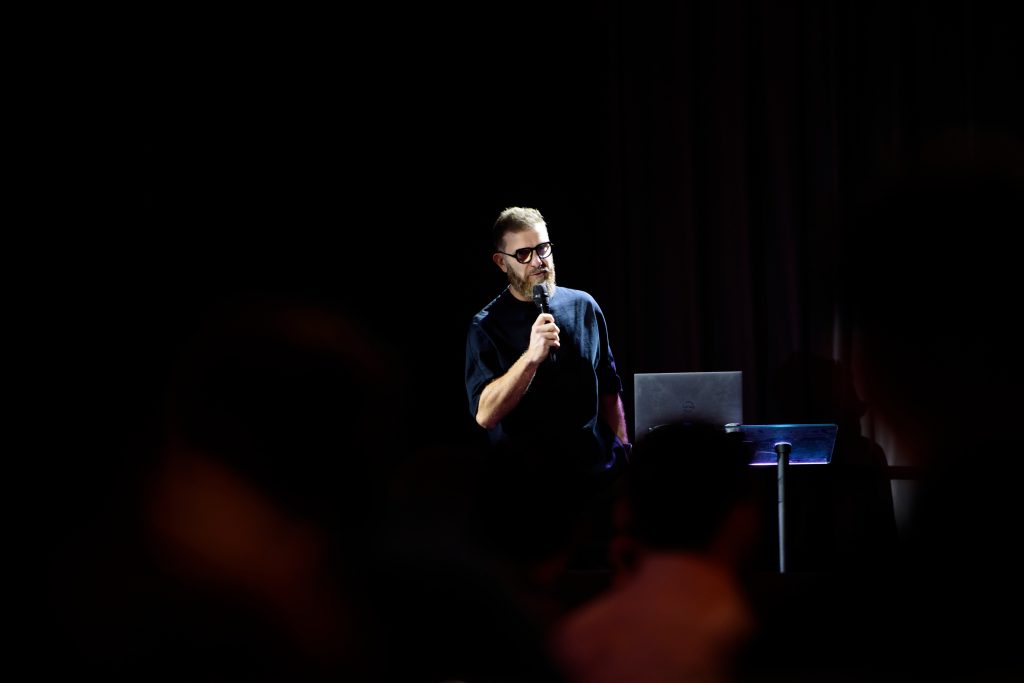
“This year’s programme had a lot on offer; it was great to attend some very insightful presentations across the various stages.
“Seminars of particular interest for me were in relation to how others are utilising AI and exploiting digital data for asset management, with these themes underpinning our very own Examination & Visualisation Environment (EVE), a solution which supports stronger asset management and informed decision-making across complex infrastructure programmes.”
Three themes shaping the future of Digital Construction
In summary, Veronica’s top three insights from the event covered the IMI Framework, Technology and the practical application of AI across the industry.
1. Information management beyond BIM
The UK is a leader in digital construction, but to maintain its global edge, it must shift focus toward the operational phase and whole-life asset performance. Whilst the ISO 19650 suite has always been about the whole life, that message hasn’t quite got across to the facilitates management and operations teams due to the language used.
It’s reassuring to see the Information Management Initiative (IMI) Framework shifting away from BIM specific terminology to support full lifecycle information management, these being reflected in the groundbreaking revisions to the ISO 19650 standards, that has reshaped the framework by officially moving away from “BIM” terminology. The framework now strictly champions “information management” to support long-term asset performance, digital twins, and smart asset management.
2. Smarter infrastructure monitoring through satellite technology
Amongst the array of talks across the various stages, it was interesting to learn more about how satellite-based Interferometric Synthetic Aperture Radar (InSAR) technology can be leveraged to monitor our critical infrastructure from space.
The core technology uses radar phase changes between satellite passes to measure ground deformation. It can also detect rapid, significant changes on the ground, such as new construction or vegetation removal, by measuring changes in radar intensity and coherence.
The presentation highlighted the practical capabilities of this technology:
- The technology can monitor millions of individual data points with millimetric precision, providing a historical archive of movement dating back to 2015.
- It helps identify where movement is occurring, the magnitude of that movement, and how the dynamics are changing over time. This is particularly useful for infrastructure assets like bridges, tunnels, embankments, and areas prone to landslips or flooding.
- Satellite data helps identify “precursory signals” of failure before they lead to damage or injury, allowing for the effective targeting of remediation resources.
The presentation went onto to discuss where satellite technology falls short – It is not a universal solution because it faces spatial and temporal monitoring gaps, is best suited for detecting gradual rather than sudden failures and requires expert interpretation and organizational integration to effectively supplement human expertise.
The key takeaway from this presentation was that InSAR technology provides a precise, scalable way to remotely monitor ageing infrastructure, particularly in the face of increasing risks from climate change. By converting vast amounts of data into digestible risk analytics, this technology allows for more targeted maintenance and a reduction in dangerous manual inspections.
3. The rapid evolution of practical AI applications
A key topic across the stages was the practical application of AI across the industry. It was inspiring to learn more about how the integration of AI, mobile LiDAR, and advanced geospatial data is fundamentally transforming the Architecture, Engineering, and Construction (AEC) sectors by shifting from manual processes to real-time 3D intelligence. With this transformation being marked by a move from small-scale pilots to enterprise-wide adoption, where AI solutions and custom agents are being used to rewire global project design, risk management, and delivery.
To ensure these advancements are not limited to large corporations, advanced geospatial AI models are democratising access to automated detection. These tools make AI-driven asset detection accessible to smaller organisations and towns by using meta-learning and active learning to identify infrastructure features even when only limited, low-cost datasets are available. Ultimately, AI serves as a “single source of truth” that increases project capacity and protects the past while building a more resilient and impactful future.
Looking ahead
Reflecting on the event, Veronica highlighted a quote that captured the mood of Digital Construction Week 2026:
“AI isn’t about the future; it’s about protecting our past.”
The statement resonated throughout many of the discussions, highlighting a growing recognition that technology’s greatest value may lie in preserving, maintaining and optimising the assets and infrastructure we already depend on.
As organisations continue to embrace AI, digital twins and advanced information management, success will increasingly depend on turning innovation into practical, scalable outcomes.
That principle sits at the heart of Morson Praxis’ Examination & Visualisation Environment (EVE), helping organisations strengthen asset management, improve decision-making and build more resilient infrastructure for the future.