22.05.2026
With more than 600 workforce leaders, over 300 Forbes Global 2000 companies, and representatives from over 50 countries gathered at the Royal Lancaster London for the SIA CWS Summit Europe on 19-20 May, the energy this year was focused on one central theme: evolution. As workforce ecosystems become more blended and complex, the strategy required to manage them must evolve too.
Morson attended as an event sponsor, with specialists from across the business engaging in brilliant conversations with HR, procurement, and talent professionals about the pressures, priorities, and opportunities shaping the next phase of workforce strategy.
Reflecting on the summit, a few standout themes and challenges dominated the floor.
1. The SOW blur: pure consultancy vs. contingent workforce
A primary talking point across the two days was Statement of Work (SOW) management – specifically, where the line blurs between genuine “pure play” consultancy and hidden contingent workforce engagements.
Many organisations admitted that consultancy spend remains a massive blind spot, often fragmented across business units. The appetite for structural clarity was higher than ever, with attendees eager to learn how a structured triage methodology can map these ecosystems, introducing commercial discipline without slowing down project delivery.
What also came through strongly was the growing recognition that compliance requires far more than a quick categorisation exercise between SOW and contingent labour. Effective governance depends on embedding experienced specialists into the decision-making process, applying tax, legal and operational rigour at the point engagements are designed and approved. That creates assurance-led decision making with clear accountability and auditability.
By contrast, lighter-touch approaches built around surface-level classification checks may provide initial confidence, but often fall short when scrutinised operationally or from a compliance perspective. The difference is not just administrative. It is the difference between governance that actively reduces risk and governance that simply documents it.
Morson Speaker Session: SOW Triage in practice
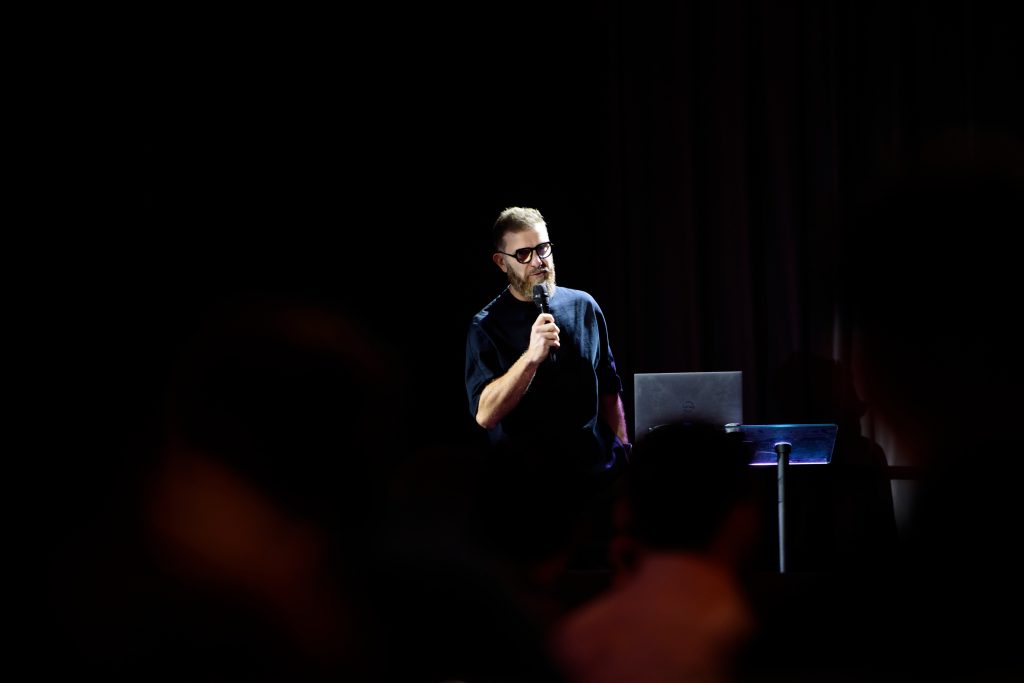
This year, Morson not only sponsored the event but also hosted a speaker session focused on one of the least controlled areas of organisational spend: “SOW Triage: Taking Back Control of Consultancy Spend.”
The session brought together an exceptional blend of commercial, consultancy, and client-side expertise to tackle why SOW and consultancy services so often lack clear ownership between procurement and HR.
- David Lynchehaun (Chief Revenue Officer, Morson Group) provided a strategic look at how organisations can align their broader commercial workforce strategy with tighter governance models.
- Gareth Beck (Managing Director, Morson Praxis) broke down the operational reality of the SOW Triage methodology. Drawing on his deep experience across regulated industries, Gareth explained how contract review, workforce classification, and expert-led decision-making can restore commercial discipline without bottlenecking project delivery.
- Dave Adey (Procurement Director, Telent) provided the crucial client perspective, sharing Telent’s real-world journey in regaining control of fragmented spend, aligning internal stakeholders, and embedding governance frameworks that drive measurable value.
Ultimately, the session demonstrated that while technology supports visibility, true control relies on expert human decision-making and robust commercial oversight.
2. The operating model debate: Why your MSP only tells half the story
One of the discussed sessions on the agenda was a structured debate weighing alternative operating models: Managed Service Providers (MSPs) versus Internal Managed Programmes (IMPs). Delegates dove deep into the trade-offs regarding cost, scalability, and compliance.
From Morson’s perspective, this debate highlighted a critical gap in how businesses view these models. Traditional MSPs excel at tracking standard contingent labor, but they often only tell half the workforce story. Just outside the boundary of the typical contingent programme sits a high-value category of external talent spend – SOW and consultancy – that remains entirely hidden. True optimisation, whether via an MSP or a hybrid model, requires extending visibility to capture the skills and spend masked by these separate procurement structures.
2. Breaking down the silos: Procurement meets HR
One of the most encouraging trends from this year’s summit was the growing alignment between procurement and HR teams.
Historically, these functions have often approached workforce strategy from different angles. Procurement focuses on cost, governance, and risk. HR focuses on experience, capability, and retention. But, when revising overall talent and people strategies, it’s clear that cost-efficiency and human experience can no longer be treated as separate objectives.
At this year’s summit, those conversations felt more connected: businesses are increasingly recognising that workforce strategy, compliance, productivity, and employee experience are interconnected. And total talent orchestration requires a unified front.
3. Taking stakeholders on the journey
It’s one thing to identify a risk or a spiralling cost; it’s another to fix it. Attendees were heavily focused on the how. The consensus was that managing SOW spend successfully relies on taking internal business stakeholders on a journey.
However, many attendees spoke openly about the challenge of bringing internal stakeholders along on workforce transformation programmes, particularly when tackling IR35 risk, consultancy governance, or approval reform.
Building a resilient strategy to mitigate IR35 risks and manage costs requires robust data, internal education, and user-friendly approval frameworks that drive genuine behavioural change across the business.
4. AI is the tool, but people are the priority
Naturally, AI was a massive talking point on this year’s agenda, but the conversation has shifted drastically from theoretical experimentation to everyday application. Sessions examined how programme leaders are now embedding AI (including agentic AI) deeply into workflows – moving past simple pilots to use the technology for sourcing, compliance, analytics, and stakeholder engagement.
However, as AI reshapes the landscape, it is also introducing highly sophisticated challenges, for example a sharp rise in candidate fraud. Attendees discussed the difficulties of detecting modern fraud, which now ranges from falsified CVs and fabricated credentials to AI-generated profiles and deepfake interviews.
As Peter Reagan, Senior Director, CWS Council said in his keynote at SIA’s 2026 CWS Summit Europe: “Artificial intelligence is accelerating that pressure for change and is scaling rapidly across sourcing, screening, workforce analytics, compliance and program operations. Nonetheless, I believe many organisations are approaching AI too narrowly.”
The overall takeaway from the floor was that while AI can augment processes and streamline data, hiring and retaining the best talent remains the ultimate driver of organisational growth. Technology is a powerful facilitator, but a human-centric workforce strategy is still the true competitive advantage.
Key takeaway: smarter workforce ecosystems
The conversations were less about trends and more about operational reality:
- How organisations gain visibility across fragmented workforce models
- How procurement and HR work together more effectively
- How businesses govern consultancy spend without slowing delivery
- How AI supports workforce strategy without replacing human judgement
“What if the way you manage talent is already obsolete?”, Peter Reagan, Senior Director at CWS Council at SIA, emphasised in the opening SIA CWS Summit keynote. The conclusion is that businesses must rethink how they manage talent, consultancy spend, compliance, and technology. So they can access smarter workforce ecosystems, stronger governance, and operating models built around flexibility, visibility, and specialist expertise.
Missed us at the summit? If you didn’t get a chance to catch up with the Morson team or want to explore how our SOW Triage approach can help your business take back control of consultancy spend, get in touch with our workforce strategy experts today.