02.04.2026
Data centre sustainability is the practice of reducing environmental impact as digital demand grows exponentially. UK data centres currently consume around 2.5% of national electricity. This figure is projected to increase four to fivefold by 2030 as cloud computing, AI and edge computing infrastructure expands. Achieving net zero requires integrated strategies: energy efficiency, renewable procurement and thermal management working together.
Estimated Reading Time: 7 minutes
What’s Driving The Urgent Need For Sustainable Data Centre Design?
Digital growth is colliding with the UK’s net zero by 2050 commitment. And the numbers tell a stark story.
Data centres now account for roughly 5 terawatt hours annually in the UK. Hyperscale facilities and AI training workloads are pushing consumption rates beyond what infrastructure planners initially expected. Digital infrastructure now underpins nearly every aspect of modern commerce, healthcare and communication systems.
Regulatory pressure’s intensifying. Large data centre operators face requirements under the Energy Savings Opportunity Scheme (ESOS) and Streamlined Energy and Carbon Reporting (SECR) in the UK. Corporate commitments from hyperscalers and colocation providers have created competitive pressure too. Major operators are pursuing carbon reduction targets and sustainability commitments.
This convergence of regulatory, commercial and reputational drivers means one thing: sustainable data centre design has moved from optional to essential. It’s fundamental for new builds and retrofit projects alike.
But here’s the challenge most people miss. The skills gap compounds these technical demands. You need specialist mechanical, electrical and controls engineering expertise capable of integrating novel cooling technologies, renewable energy systems and sophisticated building management platforms.
Finding professionals with cross-disciplinary knowledge spanning thermodynamics, power systems and data centre operations? That’s become critical to delivering facilities that meet both performance and environmental objectives.
How Does PUE Optimisation Contribute to Net Zero Objectives?
PUE optimisation is your foundational metric for energy efficiency. It measures the ratio of total facility energy to IT equipment energy. Lower values indicate better performance.
The industry average PUE sits at 1.56 according to 2024 data. That means you’re consuming 56% additional energy beyond the IT load itself. Most of this goes into cooling, power distribution losses and auxiliary systems.
Modern sustainable design now targets sub 1.2 PUE through comprehensive engineering approaches:
- High efficiency UPS systems (typically 92 to 95% efficiency, with leading modular systems achieving over 96% and some reaching 99% in eco-mode)
- Optimised electrical distribution architectures
- Advanced cooling strategies that minimise mechanical refrigeration
Engineering interventions for PUE optimisation start at the design phase. Computational fluid dynamics modelling eliminates hot spots. Strategic placement of cooling distribution units matters.
Airflow management incorporating hot aisle/cold aisle containment systems delivers immediate gains. Variable speed drives on cooling equipment, economiser modes that leverage ambient conditions and elevated operating temperatures (typically 24 to 27°C supply air versus historical 18 to 21°C standards) all reduce energy without compromising equipment reliability.
Power distribution improvements make a difference too. High voltage DC systems, transformer rightsizing and reduced conversion stages further reduce non IT energy consumption.
However, PUE optimisation alone can’t achieve net zero. Here’s why.
A facility operating at 1.1 PUE powered by fossil fuel generation still produces significant Scope 2 emissions. A 1.3 PUE facility with 100% renewable procurement may demonstrate better carbon performance. This reality’s driving the adoption of complementary metrics including Carbon Usage Effectiveness (CUE) and Water Usage Effectiveness (WUE). You need a more holistic sustainability assessment beyond pure energy efficiency ratios.
What Cooling Innovations Are Transforming Data Centre Sustainability?
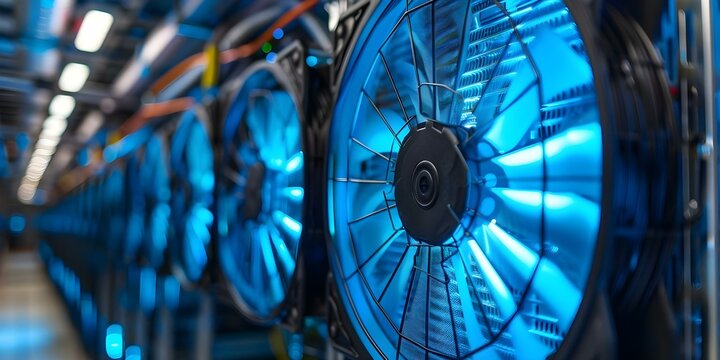
Liquid cooling technologies are revolutionising thermal management for high density computing environments. Traditional air cooling hits its limits as rack densities exceed 15 to 20kW.
Direct to chip liquid cooling, rear door heat exchangers and full immersion cooling systems can handle densities exceeding 100kW per rack. They dramatically reduce PUE through elimination of energy intensive CRAC units and raised floor air distribution systems. These technologies capture heat at the source with minimal temperature differential. This enables waste heat recovery at temperatures (50 to 60°C for liquid cooling systems) suitable for district heating networks, commercial buildings or industrial processes.
Free cooling methodologies are increasingly deployed in temperate climates like the UK. Direct fresh air cooling and indirect evaporative cooling work well where ambient conditions permit year round cooling without mechanical refrigeration for significant portions of operating hours. UK climates can enable high percentages of free cooling hours annually when you design facilities with appropriate filtration, humidity control and economiser integration.
Advanced implementations combine these approaches with adiabatic cooling for peak summer conditions. Intelligent controls dynamically optimise between cooling modes based on external weather conditions, facility load and electricity pricing signals.
But there’s an engineering challenge here.
You need to balance cooling efficiency with operational reliability. Novel cooling approaches require careful consideration of condensation risks, contaminant ingress and equipment warranty implications.
Successful implementations demand collaboration between data centre operators, OEM equipment manufacturers and mechanical engineering specialists. You need to validate thermal performance, establish appropriate maintenance protocols and demonstrate long term reliability data that satisfies both operational and insurance requirements.
This interdisciplinary approach is essential for reducing technology adoption risks and accelerating deployment timelines.
How Can You Secure and Optimise Renewable Energy Procurement?
Renewable energy procurement for data centres is becoming more sophisticated. You’re moving beyond simple Renewable Energy Guarantee of Origin (REGO) certificate purchasing towards time matched and location matched renewable supply arrangements.
Power Purchase Agreements (PPAs) with wind and solar developers provide price certainty over 10 to 15 year terms. They demonstrate additionality by bringing new renewable generation capacity online. However, wind and solar generation’s intermittent nature creates temporal mismatches with constant data centre load. You need either grid balancing mechanisms or onsite energy storage solutions to achieve genuine carbon free operation.
Onsite renewable generation through rooftop or adjacent solar arrays, combined with battery energy storage systems (BESS), enables partial autonomy and peak shaving capabilities. This reduces grid dependency during high carbon intensity periods.
Emerging approaches include behind the meter arrangements where data centres co-locate with renewable generation and storage. You’re effectively islanding from the grid during favourable renewable availability.
Geographic considerations are paramount. Facility location decisions increasingly factor renewable energy availability, grid carbon intensity and proximity to renewable generation clusters. Think offshore wind in Scotland and East Anglia or solar concentrations in southern England.
The commercial structure of renewable procurement requires careful analysis. Capacity market obligations, embedded benefits and National Grid balancing charges materially impact total cost of ownership. You need financial engineering expertise when evaluating sleeved PPAs, corporate PPAs or participation in private wire arrangements. Each structure carries distinct risk profiles around volume obligations, pricing mechanisms and curtailment provisions.
This complexity underscores the value of specialist energy procurement advisors working alongside electrical engineering teams. You need to optimise both technical integration and commercial terms.
What Role Does Waste Heat Recovery Play in Achieving Net Zero?
Waste heat recovery is emerging as a critical component of sustainability strategies. It transforms energy that would otherwise be rejected to the atmosphere into useful thermal energy for adjacent consumers.
Data centres operating with liquid cooling or high temperature air cooling can supply heat at 50 to 70°C. This is suitable for district heating networks serving residential and commercial buildings, particularly in urban environments where heating demand density justifies infrastructure investment.
Projects in London, Manchester and Edinburgh are demonstrating technical feasibility. Heat networks are capturing megawatts of thermal capacity that directly displaces natural gas consumption in connected buildings.
The engineering integration requires careful coordination across multiple systems:
- Heat exchanger sizing
- Temperature lift pumping requirements
- Backup heat rejection capacity for network outages
- Controls integration that maintains data centre operational priority
Financial viability often depends on heat offtake agreements with network operators or large anchor tenants. Policy mechanisms such as the Green Heat Network Fund can subsidise connection infrastructure.
Planning authorities are increasingly mandating waste heat recovery assessments for new data centre developments, particularly in heat network priority areas identified in local authority energy strategies.
Implementation challenges exist though.
Temporal mismatches between data centre heat availability and building heating demand create complications. Seasonal variations require heat rejection capability during summer months. You need sufficient temperature differential to enable heat network distribution without excessive pumping parasitic. Thermal storage, either at the data centre or within the distribution network, can buffer these mismatches and improve overall system economics.
Cross-sector collaboration between data centre operators, heat network developers and local authorities is essential. This unlocks stranded heat resources and contributes meaningfully to decarbonisation of heating. Residential heating accounted for 18% of UK greenhouse gas emissions in 2021, making this integration valuable for national climate targets.
What Engineering Expertise Do You Need to Deliver Sustainable Projects?
Delivering sustainable data centre infrastructure requires highly specialised engineering talent. You need expertise spanning mechanical, electrical, controls and energy systems disciplines.
Mechanical engineers with expertise in advanced cooling technologies are critical. Liquid cooling system design, free-cooling economiser integration, and thermal modelling all contribute to achieving PUE optimisation targets and maintaining equipment reliability under diverse operating conditions. Electrical engineers capable of designing high-efficiency power distribution, integrating renewable generation and storage, and implementing sophisticated metering and monitoring systems form the backbone of energy management strategies.
Controls and automation specialists are increasingly essential. Sustainable data centre design demands dynamic optimisation across multiple systems that respond to ambient conditions, facility load, electricity prices, and carbon-intensity signals. Building management system integration that coordinates HVAC, power distribution and IT workload placement requires software engineering capabilities alongside traditional building services knowledge.
Additionally, you need commissioning expertise ensuring systems perform to design intent. Ongoing measurement and verification to validate energy savings matters. Retro commissioning to maintain performance over facility lifecycles differentiates between projects that achieve sustainability targets and those that fall short.
The talent shortage across these specialisms represents a material constraint. The sector’s ability to meet growth projections and achieve decarbonisation objectives depends on solving this. Organisations that successfully attract, develop and retain multidisciplinary engineering teams with data centre domain expertise gain a significant competitive advantage in bidding, delivering and operating high-performance, sustainable facilities.
Investment in workforce development, apprenticeship programmes and knowledge transfer from experienced professionals to emerging talent is essential. You need to build the engineering capacity required to support the UK’s digital infrastructure expansion and meet net zero commitments.
Partner With Us to Access Engineering Specialists Who Deliver Sustainable Solutions
Achieving data centre sustainability requires more than ambition. It demands specialist engineering expertise, proven delivery capability and deep understanding of the technologies and commercial structures that enable net zero operation.
We connect data centre operators, developers and contractors with the mechanical, electrical and controls engineering professionals who design, commission and optimise sustainable infrastructure.
Whether you’re planning new builds, retrofitting existing facilities or seeking specialist support for PUE optimisation and waste heat recovery integration, our technical recruitment expertise ensures you access the talent required to meet both performance and environmental objectives.
Contact our specialist team today to discuss your data centre engineering requirements.