Industries
→ Manufacturing & Technology
→
Food Manufacturing
Our food manufacturing consultancy covers the full scope of design and engineering for food production facilities: structural and civil work, mechanical and electrical building services, process engineering, and project management, all co-ordinated through a single multi-disciplinary team. The UK food and drink sector contributes £42bn to the national economy and employs close to 500,000 people. The engineering behind those facilities is more demanding than most industrial work. That’s worth getting right first time.
Speak to our food manufacturing consultancy team.
What sets us apart in food manufacturing consultancy
Food production facilities tend to run into the same problems. Hygiene isn’t built into the fabric from day one. Drainage is resolved too late. Production continuity gets squeezed during a refurbishment because the construction programme wasn’t designed around it. Our team co-ordinates every discipline through a single integrated model, so structural design, building services and process layout are resolved together: a facility that works on opening day, not six months after.
We’re approved multi-disciplinary consultants on the Premier Foods Framework. We work across the full range of food manufacturing project types, from targeted plant upgrades to full new-build production facilities, and our approach is consistent across all of them. Early contractor engagement, construction programmes structured around your shift patterns, and a design process that treats production continuity as a fixed constraint from the start. Not something to accommodate. Something to design around.
Designed from the inside out
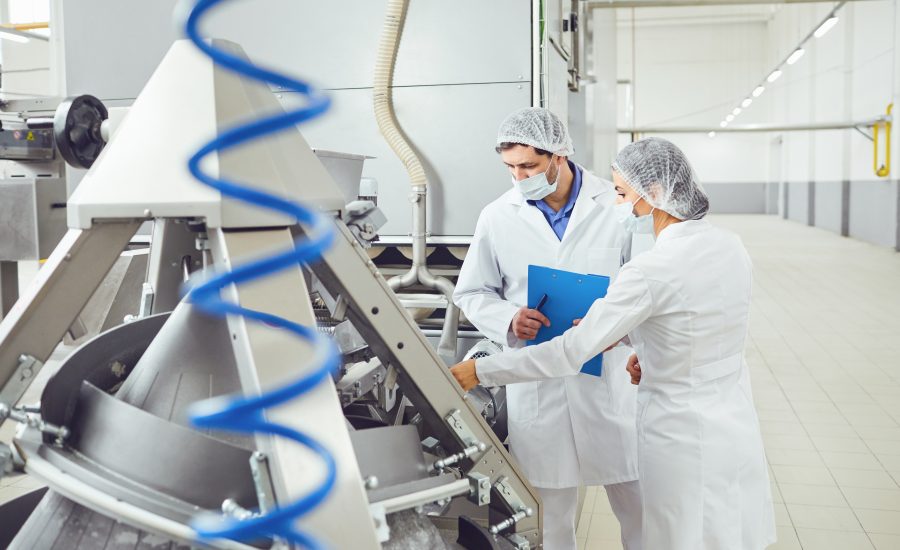
Hygiene-led food plant engineering
Every design decision in a food production facility carries a hygiene consequence. Wall and floor junctions, drainage gradients, surface finishes, circulation routes between raw and finished product. Each one either supports or compromises the cleanability of the building over time. We design to BRCGS and EHEDG guidance from concept stage, embedding hygiene into the structural and building services specification before the layout is fixed, not after.
Production never stops
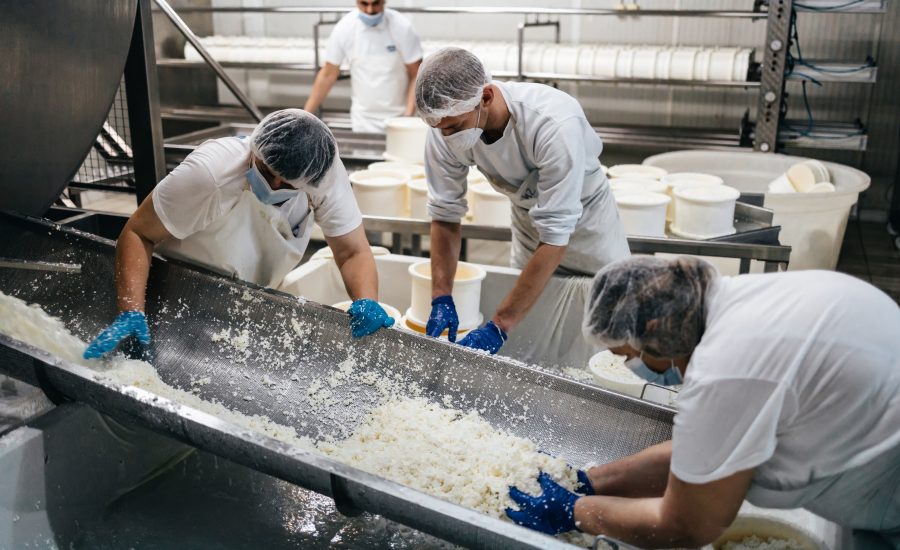
Live-environment delivery on active sites
Most food manufacturing projects can’t wait for a planned shutdown. Customer commitments are fixed and any gap in output carries a direct commercial cost. We’ve developed the methodology to deliver structural, mechanical and electrical work inside fully operational food plants: phased sequencing, temporary segregation where contamination risk demands it, and construction programmes built around your shift patterns rather than ours. Interventions are planned precisely, and the plant keeps running.

From ambient to frozen
Multi-temperature facility design and thermal zoning
A food plant handling ambient, chilled and frozen product is, in engineering terms, several different buildings operating as one. Each zone carries distinct structural loading, vapour control and drainage requirements, and the interfaces between them need to be resolved at concept stage. We co-ordinate structural and building services design through a single model, so thermal boundaries, floor specifications and refrigeration integration are agreed before detailed design begins.
Food manufacturing in practice
Automotive engineering in the UK is under more pressure than it’s been in decades. New model programmes, gigafactory investment and a hard 2030 end date for petrol and diesel are forcing manufacturers to move fast on infrastructure. We design the facilities that make that possible: assembly lines, trim and final buildings, paint shops and vehicle operations facilities, coordinated across civil, structural and process engineering from a single point of accountability.
Data centre engineering sits at a point where the physical and the digital converge, and the margin for error is genuinely narrow. AI workloads are changing what these facilities need to do. Rack densities are rising. Power and cooling requirements are shifting faster than most design programmes account for. We bring the disciplines together in-house, civil and structural, M&E, BIM, sustainability and commercial risk management, from feasibility through to handover.
Process engineering is where chemistry, physics and commercial reality have to agree. We work with manufacturers and operators across food processing, agrochemicals and industrial sectors to design, optimise and troubleshoot the processes that keep production running. Our industrial engineering consultancy covers the full asset lifecycle: from initial feasibility and process design through to commissioning, optimisation and decommissioning. The decisions made early in a project shape what’s possible at every stage that follows.
Pharmaceutical engineering leaves little room for approximation. A facility that doesn’t perform at qualification isn’t just a project problem. It’s a regulatory one, with direct consequences for production timelines and patient supply. Morson Praxis works with pharmaceutical manufacturers across the UK to design GMP-compliant facilities that are built around your manufacturing process and ready to stand up to inspection.
FAQs: Understanding food manufacturing
Frequently asked questions (FAQs) about food manufacturing.
A food manufacturing consultancy is a multi-disciplinary technical practice that designs and engineers food production facilities, covering structural and civil design, mechanical and electrical building services, process engineering, utilities and project management. The role is to co-ordinate those disciplines so the building and the process it houses work as a single integrated system, from initial planning through to handover.
Food plant engineering in the UK is governed by several overlapping standards. Key frameworks are the British Retail Consortium Global Standard for Food Safety (BRCGS), EHEDG guidelines on hygienic equipment and facility design, and Environment Agency requirements for trade effluent and waste. BRC-accredited food manufacturers are also subject to the specific facility standards set by major UK retailers as a condition of supply.
Food manufacturing consultancy is a more demanding discipline than general industrial design because hygiene and contamination risk affect every technical decision. Drainage gradients, wall and floor junctions, surface finishes, ventilation strategy and circulation routes all need to meet food safety requirements. A standard industrial approach doesn’t account for this. Food plant engineering requires those requirements to be embedded from the first concept, not retrofitted later.
Food plant engineering on a live site is entirely achievable, provided the programme is built around production from the start. Phased sequencing, temporary hygiene segregation, and shift-aligned construction windows are standard tools. The difference between a project that keeps the plant running and one that doesn’t is usually whether production continuity was treated as a design constraint or an afterthought.
Process engineering in food manufacturing consultancy is the discipline that connects the production process to the building housing it. It covers utilities design, including steam, compressed air and chilled water distribution, trade effluent and waste treatment, and the co-ordination of production equipment layouts with the structural and building services design. Resolving those interfaces early prevents costly clashes between process requirements and the built fabric later in the programme.