Industries
→ Manufacturing & Technology
→
Automotive Plant Design
Automotive engineering in the UK is under more pressure than it’s been in decades. New model programmes, gigafactory investment and a hard 2030 end date for petrol and diesel are forcing manufacturers to move fast on infrastructure. We design the facilities that make that possible: assembly lines, trim and final buildings, paint shops and vehicle operations facilities, coordinated across civil, structural and process engineering from a single point of accountability.
Speak to our automotive engineering team
Every pipe run, structural grid and drainage route in an automotive plant has to work around production flow, tooling envelopes and the possibility that the model mix changes in three years. Getting that coordination right in design costs almost nothing. Getting it wrong on site is expensive and disruptive. We bring civil engineering, structural engineering, process engineering and building services under one appointment, so those conflicts are resolved before construction starts.
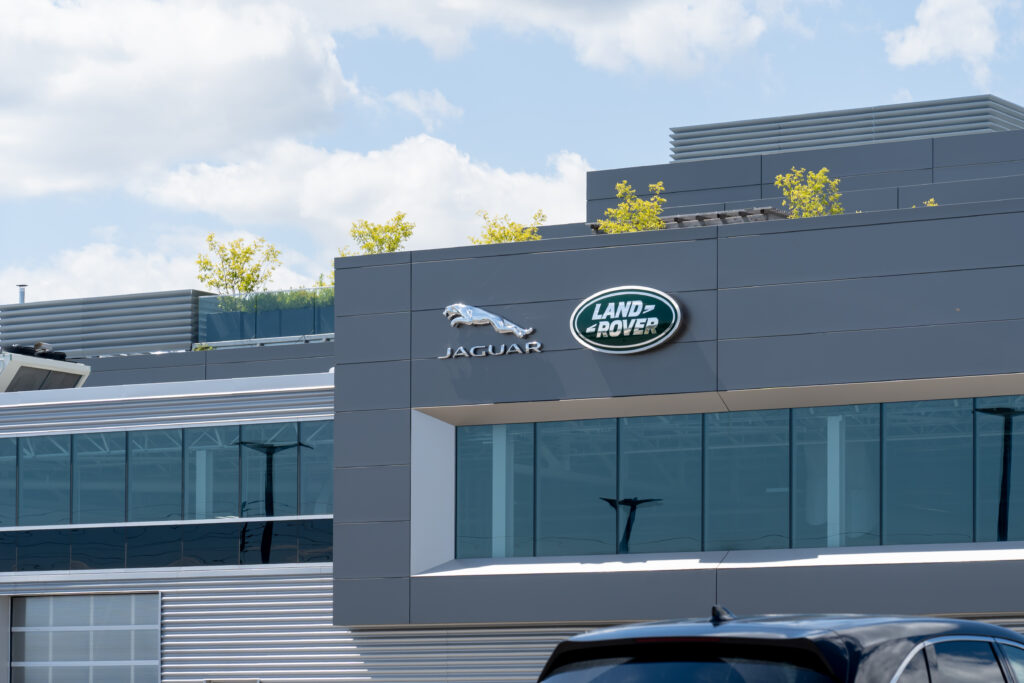
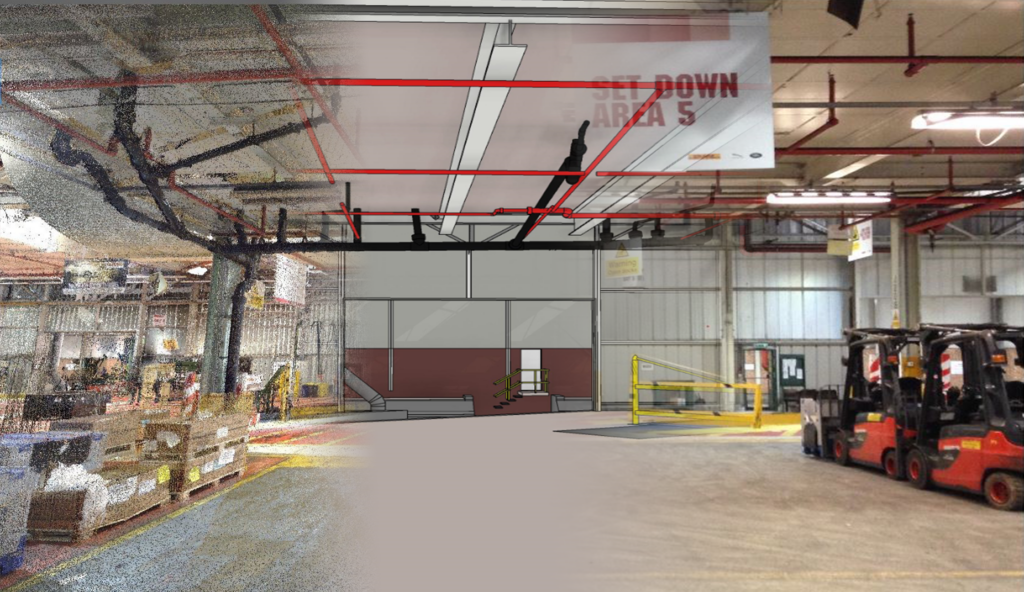
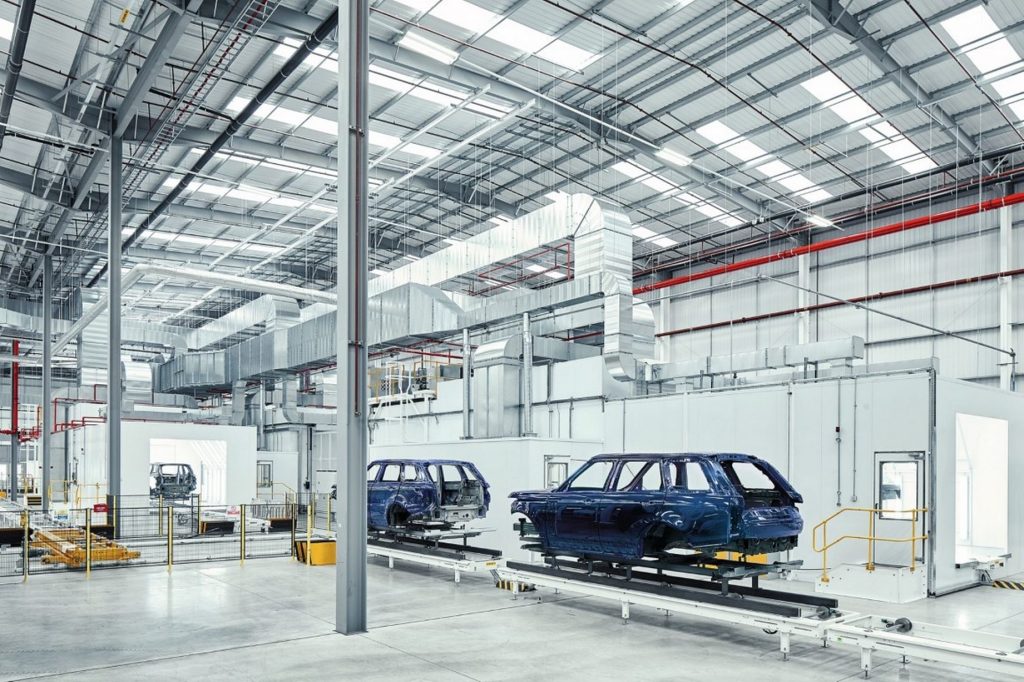
Our relationship with Jaguar Land Rover spans multiple facilities: a £50 million Trim and Final Line at Solihull, a Vehicle Operations campus with 180 workshop bays and a specialist paint shop, and a classic car restoration facility that’s the largest of its kind in the world. Manufacturers return to us because the technical decisions we make in design hold up when the facility goes into production.
Electric age infrastructure
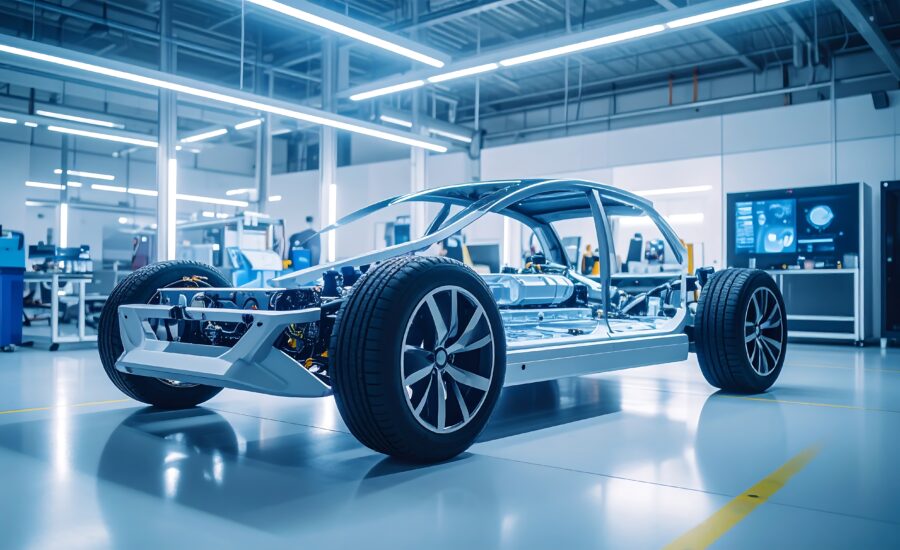
Designing for battery production and EV assembly
Battery module assembly loads floors differently, draws power at a different order of magnitude and demands tighter environmental control than a conventional engine line. High-voltage electrical distribution has to be in the brief at the start, not added later. We’ve been working through these requirements with manufacturers as the industry has changed, so we’re not learning on live programmes.

Whole-life cost
Buildings that stay fit for purpose
Column grids, substructure capacity and services infrastructure all constrain a facility long after the original brief is closed. We specify with future flexibility in mind: grid spacings that accommodate the next generation of tooling, spare capacity in primary services routes, and ground investigations detailed enough to leave layout options open. A facility built to those standards costs less to operate and less to adapt.

Principle Designer services
Health and safety built into the design
As Principal Designers under the CDM Regulations 2015, we hold formal responsibility for health and safety from the first design decision. Automotive environments carry specific risk: high-bay structures, heavy tooling, chemical handling and active production schedules running alongside construction. We manage that through the pre-construction health and safety file, not around it, which means hazards are designed out before anyone sets foot on site.
Automotive engineering in practice
Data centre engineering sits at a point where the physical and the digital converge, and the margin for error is genuinely narrow. AI workloads are changing what these facilities need to do. Rack densities are rising. Power and cooling requirements are shifting faster than most design programmes account for. We bring the disciplines together in-house, civil and structural, M&E, BIM, sustainability and commercial risk management, from feasibility through to handover.
Our food manufacturing consultancy covers the full scope of design and engineering for food production facilities: structural and civil work, mechanical and electrical building services, process engineering, and project management, all co-ordinated through a single multi-disciplinary team. The UK food and drink sector contributes £42bn to the national economy and employs close to 500,000 people. The engineering behind those facilities is more demanding than most industrial work. That’s worth getting right first time.
Process engineering is where chemistry, physics and commercial reality have to agree. We work with manufacturers and operators across food processing, agrochemicals and industrial sectors to design, optimise and troubleshoot the processes that keep production running. Our industrial engineering consultancy covers the full asset lifecycle: from initial feasibility and process design through to commissioning, optimisation and decommissioning. The decisions made early in a project shape what’s possible at every stage that follows.
Pharmaceutical engineering leaves little room for approximation. A facility that doesn’t perform at qualification isn’t just a project problem. It’s a regulatory one, with direct consequences for production timelines and patient supply. Morson Praxis works with pharmaceutical manufacturers across the UK to design GMP-compliant facilities that are built around your manufacturing process and ready to stand up to inspection.
FAQs: Understanding automotive engineering in the UK
Commonly asked questions about automotive engineering.
An automotive engineering consultancy is responsible for the technical design and coordination of manufacturing facilities. That covers structural and civil engineering, building services, process integration and health and safety compliance under the CDM Regulations 2015. On larger programmes it acts as Principal Designer, managing design interfaces across disciplines and holding responsibility for pre-construction safety coordination from the earliest stage of a project.
Automotive plant design is the process of engineering a vehicle manufacturing facility around its production requirements. Structure, substructure, services distribution, environmental control and process equipment integration all have to be designed together, not in sequence. For electric vehicle programmes, that scope now includes high-voltage electrical infrastructure, floor loadings for battery assembly and the utility densities that EV production draws at scale.
Automotive engineering in the UK is being rewritten by the shift to electric vehicles. Battery assembly requires different floor specifications, higher electrical capacity and stricter environmental control than conventional production lines. The engineering brief for a new EV facility starts from different assumptions, and the infrastructure decisions made at design stage are harder to reverse than they were for internal combustion plants.
Automotive plant design is most effectively delivered through a single multi-disciplinary appointment because the risk sits at the interfaces, not within each individual discipline. Structure, services, process and safety compliance all affect each other. When those disciplines are coordinated within one organisation, conflicts are caught in the model. When they’re split across separate appointments, they tend to be caught on site, which is considerably more expensive.