Industries
→
Marine
Our marine engineering services have been turning ambitious concepts into seaworthy realities for more than two decades. We work with defence organisations, commercial operators, and port authorities on programmes that demand both technical depth and practical delivery.
-
Marine Industries ↓
- Ships →
- Submarines & Underwater Systems →
What sets us apart in marine engineering
Grounded in real programmes, not just credentials
Experience built on programmes that matter
Our team includes chartered engineers with backgrounds at Lloyd’s Register, Babcock, BAE Systems, and Rolls-Royce. We’ve contributed to some of the most technically demanding defence programmes in the UK, including the Dreadnought submarine programme, the Type 26 frigate new-build, and the Type 45 destroyer repowering programme.
We work to defined schedules and clear scopes, stepping in with the right capability at the right point in a programme, then scaling back when the project moves on. We’re also active members of the Naval Design Partnering Team steering group, with established working relationships across Lloyd’s Register, DNV, Bureau Veritas, and the Maritime and Coastguard Agency. When a submission is under review, those relationships count.
Our marine engineering expertise
Two areas sit at the heart of what we do in the marine sector. Each demands a different kind of knowledge and a different approach to risk.

Ships
Naval architecture, structural analysis, hydrodynamics, propulsion, systems integration, regulatory approval: these workstreams don’t always move at the same pace, and managing them well is as important as getting the engineering right. We support clients across the full lifecycle, from initial concept and feasibility through detail design, hull modelling, powering prediction, and tank testing, to through-life support once a vessel is in service.
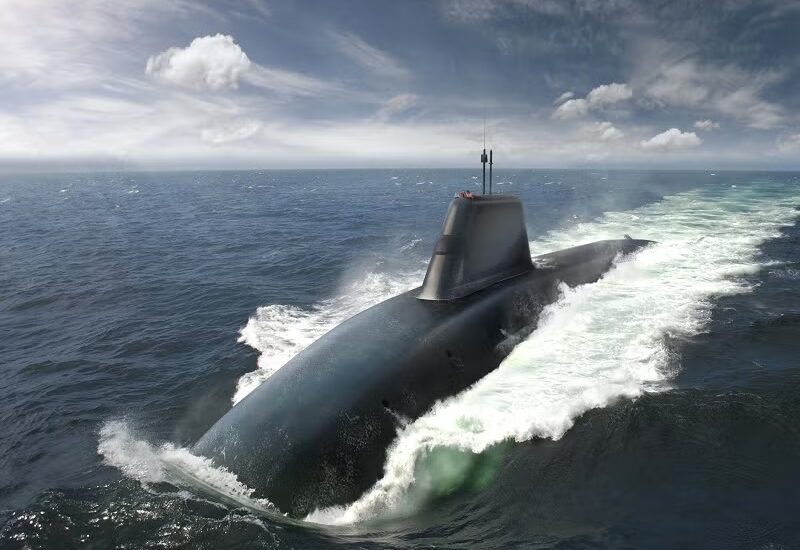
Submarines & Underwater
Subsurface work operates under a different set of constraints. The environment is more demanding, the tolerances are tighter, and the governance frameworks are more complex. What distinguishes our team here is the people in it. We’ve brought former submariners into our technical and assurance roles: engineers who’ve operated in the environments they’re now designing for. That operational background produces a quality of project understanding that’s hard to replicate.
A considered approach to marine engineering
How we engage
Starting at the right point saves time later
The most effective marine engineering begins with the right questions. What is this vessel actually for? What conditions will it operate in? What does the classification society need to see, and when? We work with clients at every stage of that process: from shaping a concept into a credible design brief, to validating structural analysis on a programme already in motion. Getting the groundwork right early is consistently where cost and schedule risk is reduced most.
Stability and compliance
Precise analysis, practical documentation
Ship stability looks straightforward in principle. In practice, a vessel’s behaviour shifts with loading condition, damage scenario, and sea state. We model all of it. Our stability books and technical documentation are written to be used at sea, not just to satisfy a checklist: clear, accurate, and produced to classification-approved standards. For vessels under international conventions or UK flag requirements, we work directly with the MCA and relevant classification bodies to keep the approval process on track.
Through-life support
Support that continues long after launch
A vessel’s engineering needs don’t stop when it enters service. Systems age, regulations change, and operational requirements shift. We provide through-life support across asset care, technical documentation, reliability-centred maintenance analysis, and in-service modifications. For defence clients, this phase is often as technically demanding as the original design work. We understand the governance frameworks involved and are experienced in working within them.
Turning theory into practice
Kick-start your next project with us
Your partner in marine engineering
Talk to our marine engineering team
If you’re working on a marine programme and need a partner with experience and the capacity to deliver, we’d like to hear about it. We work with defence primes, commercial operators, port authorities, and classification bodies, at whatever stage of the project you’re at.
Delivery done differently
FAQs: Understanding marine engineering
Marine engineering is a field of engineering that deals with the design, construction, installation, operation, and maintenance of ships, boats, submarines, and offshore structures, as well as the related systems and equipment that enable them to function effectively. It encompasses a wide range of engineering disciplines, including mechanical, electrical, electronic, and naval architecture.
Marine engineers in the UK are responsible for designing, maintaining, and repairing ship systems. They ensure ships are safe, efficient, and environmentally friendly. Their duties include monitoring performance, managing budgets, responding to emergencies, and staying updated with maritime regulations. They play a vital role in the UK’s maritime industry, focusing on safety and sustainability.
Yes, marine engineers in the UK can work on oil rigs. They are responsible for maintaining and overseeing the mechanical, electrical, and propulsion systems on these offshore structures.
It can take approximately 4 to 8 years to become a qualified marine engineer in the UK, depending on your educational path, practical experience, and the pursuit of professional certifications.