06.04.2026
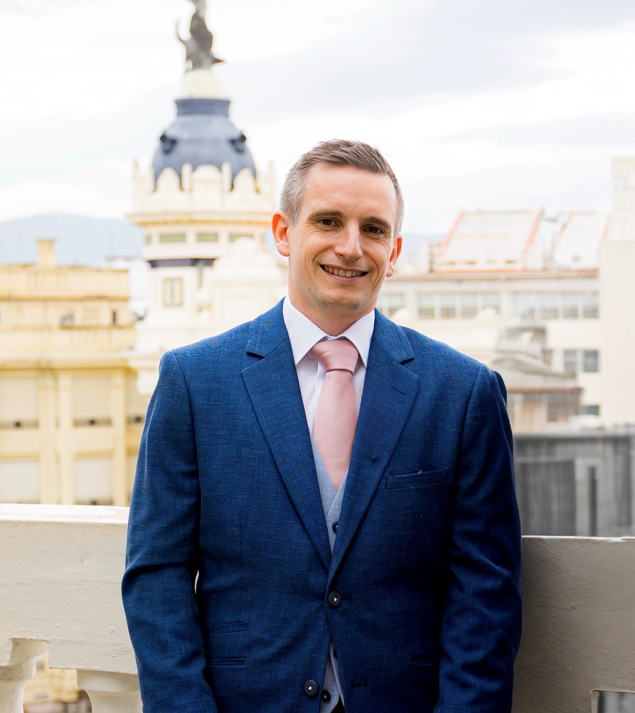
As part of our ‘Meet the Team’ series, we caught up with Patrick O’Riordan, a Graduate Stress Engineer who is part of our Marine Team, whilst also currently being enrolled on our wider Early Careers Development Programme.
Based in our Manchester office, Patrick has been working at Morson Praxis since 2024, where we welcomed him as a Graduate Stress Engineer.
We caught up with Patrick to hear more about his Early Careers Development Programme journey so far:
Hi Patrick! Can you tell us a bit about your role?
“Yes of course! I currently work as a stress engineer on a major marine defence programme, where I assess changes to secondary steel structures. My role focuses on ensuring designs meet strength and acoustic requirements in line with Ministry of Defence standards.
“My day-to-day involves a lot of detailed analysis, reviewing calculations, and making sure everything is technically robust and safe. It’s a role that requires a high level of accuracy and responsibility, which is something I really enjoy.”
What’s been a standout achievement so far?
“One of my proudest achievements has been identifying and resolving a critical error in a structural analysis. The issue related to how trigonometric formulas were being used to convert spherical coordinates into Cartesian vectors, which led to underestimated loads.
“I took the time to fully understand the root cause, researched the underlying theory, and worked with colleagues to validate a solution. I then developed a corrected method and presented it to the customer, along with a technical justification.
“Following review, the solution was approved, and a tool I developed is now being used for future applications. It was a great example of how attention to detail and curiosity can make a real impact.”
How have you found the transition from university to industry?
“The transition has been both challenging and rewarding. Early on, I was keen to push myself outside of my comfort zone and take on new challenges, which wasn’t always easy at first.
“However, through the support of the Early Careers Development Programme and mentorship, I’ve grown in confidence and capability. It’s helped me develop not just technically, but professionally as well.”

You’ve also been involved in early careers outreach, what does that involve?
“I’ve had the opportunity to represent Morson Praxis at a number of university careers fairs, speaking with students and graduates about engineering and career pathways.
“It’s something I’ve really valued, as I can relate to the questions and uncertainties students often have. I always share honest insights from my own experience and help make engineering feel more accessible.”
Why is inclusivity in engineering important to you?
“I strongly believe that everyone should feel represented and welcomed in engineering. When speaking to students, I try to challenge any misconceptions and show that there isn’t just one “type” of engineer.
“It’s about creating an environment where people feel they belong and can see a future for themselves in the industry. Being able to contribute to that, even in a small way, is something I’m really proud of.”
What advice would you give to aspiring engineers?
“Advice I can give to future engineers would be to never be afraid to ask questions, and to step outside your comfort zone. Some of the biggest opportunities for growth come from the challenges that feel the most unfamiliar at first.
“Also, take the time to really understand the “why” behind what you’re doing as it makes a huge difference in developing as an engineer.”
Mike Allan, Stress Engineer and Patrick’s Mentor, shared:
“Pat was assigned a particularly tricky package of work to tackle, which involved analysis of the Pressure Hull Dome structure. Pat was provided with a Tech Note and an example report of how to calculate the shock accelerations on the Dome. Instead of following the guidance blindly, Pat took the time to understand the methodology presented to him in the Tech Note and Map 01-470. In doing so, he has identified a misunderstanding of how the acceleration in the dome region should be calculated. Pat presented his work to the client, and we have had confirmation that they do believe they have misunderstood the documents and made an error.
“Pat’s curiosity and courage to first speak up about potential flaws and then follow it through to solutions was impressive to say the least, but it has also paved the way for more accurate analysis of safety critical structure.
“Pat has been in the industry for just less than two years but is already contributing and shaping the multi-billion-pound defence project. I have been impressed by Pat’s confidence and courage throughout this process. We have come across a few older reports that have used the erroneous method, which to me shows how easily it would have been to just use the method without thought.”
Find out more about our Early Careers Development Programme here>